
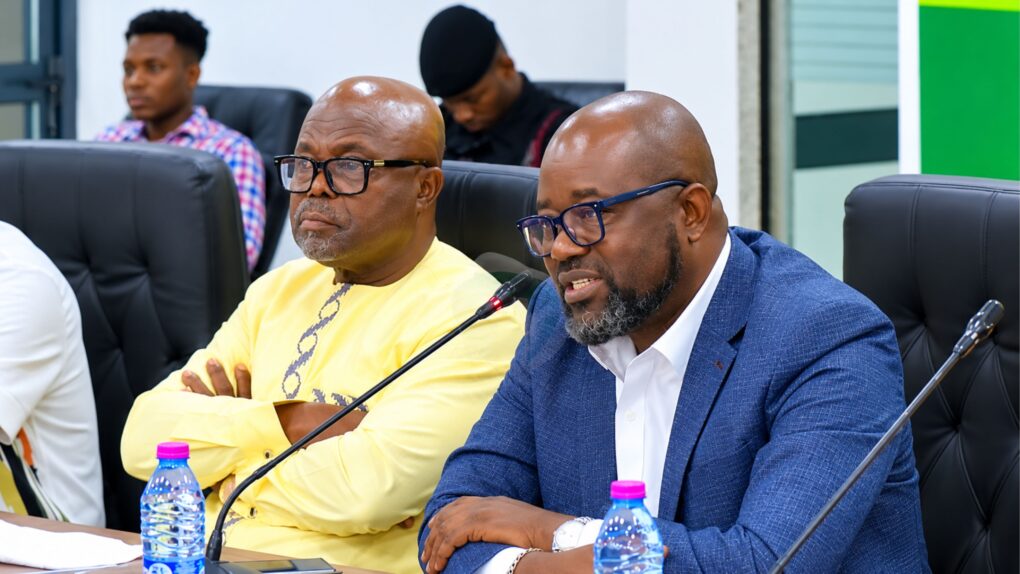
Ghana Football Association (GFA) President Kurt Edwin Simeon-Okraku has appealed to Parliament’s Youth and Sports Committee to push for the removal of restrictions preventing alcoholic beverage companies from sponsoring sporting activities in Ghana.
Mr Okraku argued that the existing regulations are depriving Ghanaian football and other sporting disciplines of significant financial support from major corporate sponsors.
He cited a proposed sponsorship agreement worth more than $5 million annually between Guinness Ghana Limited and the GFA, which reportedly collapsed following objections from the Food and Drugs Authority (FDA).
The GFA President made the appeal when he appeared before Parliament’s Youth and Sports Committee to discuss challenges affecting football development and the country’s sporting industry.
According to him, Guinness Ghana had approached the Football Association with plans to make substantial investments in the Ghana Premier League. However, negotiations could not produce an agreement after the FDA rejected the proposed sponsorship arrangement.
“We were approached by Guinness Ghana Limited wanting to invest heavily in the Ghana Premier League. We did whatever we had to do. We had series of meetings. At the end, FDA said no. The deal was, if I’m not mistaken, over $5 million a year,” he told the Committee.
Kurt Okraku Wants FDA Alcohol Sponsorship Restrictions Removed
Mr Okraku called on Parliament to review the legal provision that gives the FDA authority to approve or reject sponsorship arrangements involving alcoholic beverage manufacturers.
He believes removing the restriction would create opportunities for private-sector investment in Ghanaian sports, particularly football, where funding remains a major challenge.
“Mr Chairman, if there’s one thing that you can do to help sports and football, that will be for you to lead the charge to completely take out that provision,” he appealed.
The GFA President observed that several leading international football leagues benefit from lucrative sponsorship agreements with major alcohol brands, while Ghanaian clubs and sporting organisations are unable to access similar financial opportunities.
He maintained that opening up the sponsorship market could attract more corporate partnerships, increase revenue for football clubs and support the commercial development of the Ghana Premier League.
Poor Football Infrastructure Affecting Ghana’s Sporting Development
Beyond the sponsorship restrictions, Mr Okraku identified inadequate football infrastructure, poor playing pitches, insufficient stadium facilities and limited investment in technical development as major challenges affecting Ghanaian football.
He explained that although the GFA is responsible for providing logistics and creating an enabling environment for football development, achieving consistent success requires long-term financial commitment from government, businesses and other stakeholders.
According to him, Ghana must prioritise investment in grassroots football, youth development programmes and professional coaching education to build a strong foundation for the country’s national teams.
GFA Calls for Investment in Youth Football and Coach Development
Mr Okraku further stressed the importance of strengthening football scouting systems, improving training facilities and providing local coaches with international exposure.
He said sustained investment in coach education and youth football development would help Ghana identify emerging talents and improve the technical quality of players and coaches.
The GFA President also called for the construction and rehabilitation of quality football pitches for both young and senior players, alongside improvements in stadium infrastructure across the country.
“If one has to be honest, Mr Chairman, there is a lot more that brings sustained success in football. This includes, but is not limited to, continuous investment in grassroots football, continuous investment in youth football, sustained and continuous investment in coach education, exposing your coaches to the international market,” he stated.
He expressed concern that many of the essential facilities and development structures required to build a competitive football system remain inadequate in Ghana.
Mr Okraku warned that without consistent investment in football infrastructure, youth development, coaching and corporate sponsorship, Ghana could struggle to achieve sustained success in major international football competitions.
His appeal has renewed discussions about sports sponsorship regulations, private-sector investment and the funding challenges facing Ghanaian football.
Source: newsthemegh.com