
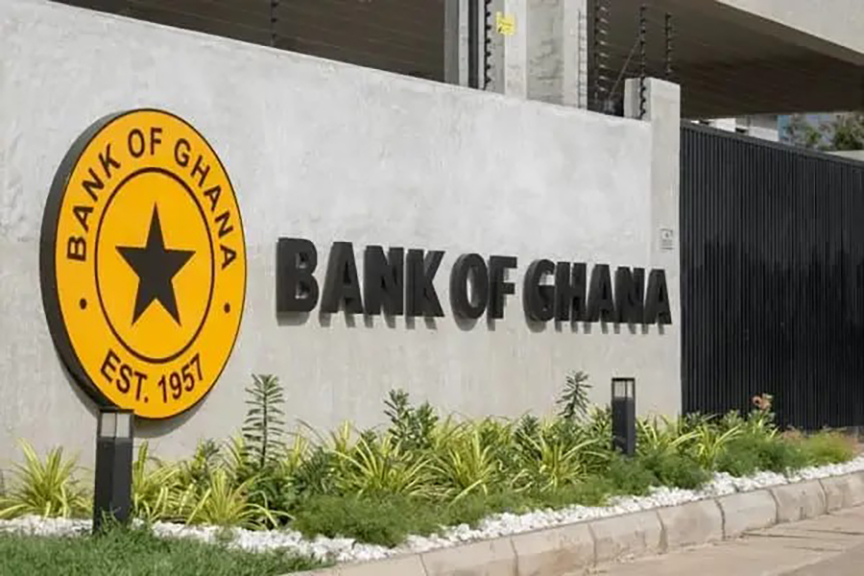
The Bank of Ghana (BoG) has explained that the GH¢17.5 billion accounting loss recorded under the 2025 Domestic Gold Purchase Programme (DGPP) was largely caused by the significant appreciation of the Ghanaian cedi against the US dollar.
According to the central bank, the reported amount does not represent an actual cash loss to the country but rather an accounting adjustment arising from fluctuations in exchange rates during gold purchases, exports and foreign exchange conversions.
The explanation was provided by the Head of Gold at the Bank of Ghana, Paul Bleboo, when the central bank’s management appeared before Parliament’s Economy and Development Committee.
The delegation was led by the Governor of the Bank of Ghana, Dr Johnson Pandit Asiama.
During the parliamentary engagement, Mr Bleboo disclosed that the Domestic Gold Purchase Programme generated approximately US$10 billion in foreign exchange and contributed about 11 tonnes of physical gold to Ghana’s international reserves in 2025.
He, however, indicated that the total operational cost of the programme stood at US$21.89 billion, with exchange-rate differences accounting for the largest portion of the reported costs.
Cedi Appreciation Responsible for GH¢17.5bn Accounting Loss
Explaining the circumstances behind the GH¢17.5 billion figure, Mr Bleboo said the losses were primarily linked to the difference between the exchange rates prevailing when gold was purchased locally and the rates applied when export proceeds were converted into Ghanaian cedis for financial reporting.
He explained that gold was initially purchased from local suppliers using prevailing market exchange rates before being transported overseas, refined and sold for foreign currency.
The resulting dollar proceeds were subsequently converted into cedis using the Bank of Ghana’s official reference exchange rates for accounting purposes.
However, the process could take an average of 10 days, exposing the programme to exchange-rate fluctuations during the period.
Mr Bleboo noted that Ghana experienced a significant appreciation of the cedi in 2025, estimated at approximately 40 per cent, which contributed to the substantial accounting difference.
He illustrated the situation by explaining that if the central bank purchased gold when the exchange rate was GH¢15 to US$1, but the cedi appreciated to GH¢12 to US$1 before the export proceeds were converted, the difference would create a considerable accounting loss.
According to him, this exchange-rate movement was responsible for approximately GH¢17.5 billion of the reported amount.
He stressed that the figure should not be interpreted as money physically lost by the country, describing it instead as an accounting loss resulting from currency appreciation.
The BoG official further explained that the accounting difference could have been avoided or reduced if the foreign exchange generated from gold exports had remained in US dollars rather than being converted into cedis for reporting purposes.
He added that the central bank was required to apply its official reference exchange rates, which were lower than the market rates used when purchasing the gold.
BoG Defends Economic Benefits of Domestic Gold Purchase Programme
Despite the reported accounting costs, Mr Bleboo defended the Domestic Gold Purchase Programme, highlighting its contribution to Ghana’s foreign exchange reserves and physical gold holdings.
He explained that the approximately US$10 billion in foreign exchange generated and the 11 tonnes of gold added to the country’s reserves represented two distinct benefits of the programme.
He maintained that these achievements were important in strengthening Ghana’s gold reserves and supporting the country’s foreign exchange position.
The BoG official also outlined other expenses associated with the programme, including purity adjustments, trading costs, off-take discounts, GoldBod service charges, assay fees, refinery expenses, manufacturing costs and logistics.
Gold Purity Differences and Refinery Charges Add to Programme Costs
On gold purity adjustments, Mr Bleboo explained that locally purchased gold is generally supplied in doré form, which requires further processing and refining before it can be sold internationally.
He noted that differences between the gold-testing methods used by local authorities and overseas refineries could result in variations in the measured gold content.
According to him, international refineries typically use the fire assay method, which may produce different results from the testing procedures applied locally.
To account for these differences, the programme makes a provision of approximately 0.7 to 0.8 per cent for purity losses during the refining process.
He explained that these adjustments form part of the operational expenses associated with processing and exporting gold purchased under the programme.
Mr Bleboo also addressed off-take discounts, which cover expenses incurred by international buyers when taking delivery of gold and arranging its export.
These expenses include transportation, insurance and refining costs.
He disclosed that the Bank of Ghana had negotiated a reduction in the off-take discount from 1.3 per cent to 1 per cent in 2025 as part of efforts to reduce the overall cost of the Domestic Gold Purchase Programme.
According to him, the central bank had reviewed the various cost components and engaged stakeholders to renegotiate charges and improve the programme’s financial efficiency.
The Bank of Ghana’s explanation comes amid parliamentary scrutiny of the Domestic Gold Purchase Programme, particularly its financial performance, operational costs and contribution to Ghana’s foreign exchange reserves.
The clarification is intended to distinguish between the reported accounting loss arising from cedi appreciation and an actual financial loss, while highlighting the programme’s role in generating foreign exchange and increasing Ghana’s physical gold holdings.
Source: newsthemegh.com