
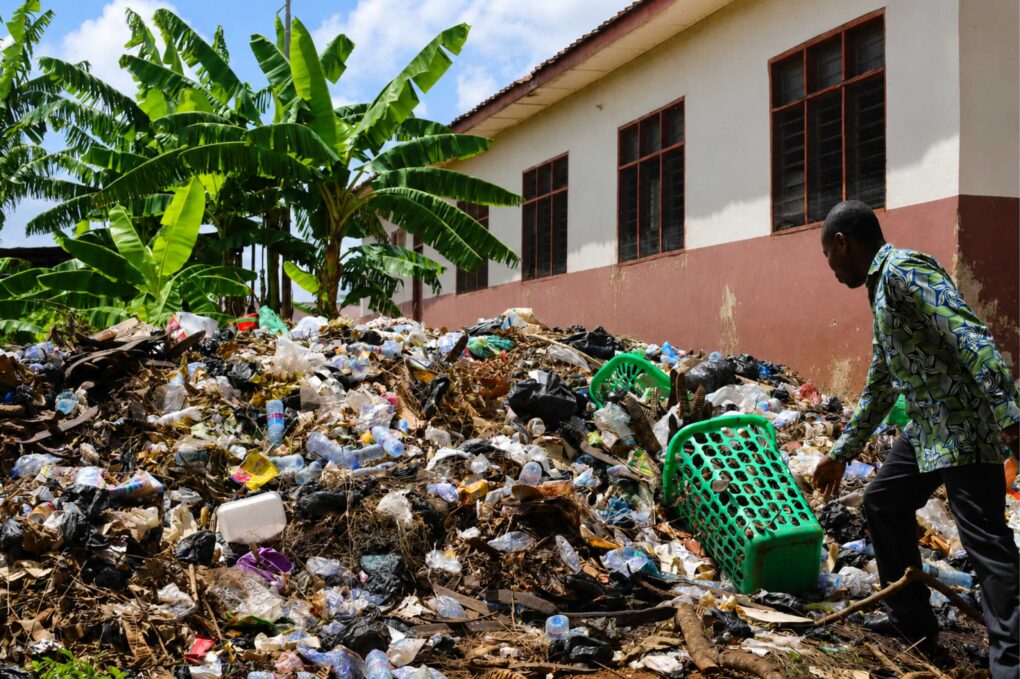
Ghana is losing more than GH¢6.2 billion every year through healthcare costs and productivity losses linked to poor sanitation and inadequate waste management, according to a new policy brief by the Institute of Statistical, Social and Economic Research (ISSER).
The February 2026 ISSER report is calling for increased government investment in sanitation, waste management and drainage infrastructure, warning that the economic cost of inadequate sanitation is significantly higher than current public spending in the sector.
Poor Sanitation Creates Major Economic Losses
According to ISSER, Metropolitan, Municipal and District Assemblies (MMDAs) collectively spent approximately GH¢180.2 million on waste management and sanitation.
By comparison, the estimated annual economic burden associated with poor waste management exceeds GH¢6.2 billion.
The report estimates that about GH¢5.58 billion of the losses comes from direct medical expenses, while approximately GH¢650 million is linked to lost productivity.
The researchers identified preventable diseases including malaria, cholera and typhoid among the health conditions contributing to the economic burden.
ISSER estimates that sanitation-related illnesses account for about 31.9 million lost work and school days every year, while contributing to an estimated 107,222 premature deaths annually.
ISSER Calls for Increased Sanitation Investment
The research institute argues that sanitation should no longer be treated mainly as a social or environmental issue. Instead, it should be incorporated into Ghana’s broader economic development and public investment strategy.
According to ISSER, rapid urbanisation, population growth and changing consumption patterns are generating increasing quantities of solid and liquid waste, placing additional pressure on local authorities.
Many MMDAs, the report notes, lack the financial resources and infrastructure needed to effectively manage the country’s growing waste management challenge.
The consequences extend beyond unclean communities and overflowing waste disposal sites, affecting public health, worker productivity, education and economic growth.
Focus on Drainage and Waste Management Infrastructure
ISSER is recommending significantly higher public spending on sanitation, drainage systems and environmental health infrastructure.
The institute wants government to prioritise interventions that can deliver substantial public health benefits, including improved faecal sludge management and the removal of open refuse dumps that can contribute to the spread of diseases.
It also recommends directing more capital investment towards high-risk urban and peri-urban communities.
These include densely populated informal settlements, flood-prone areas and communities with limited access to adequate sanitation facilities.
ISSER believes targeted investment in these communities could help reduce disease cases and mortality while addressing the disproportionate impact of poor sanitation on vulnerable populations.
Ghana Faces Major Waste Management Financing Gap
The ISSER policy brief also highlights what it describes as a significant financing gap in Ghana’s waste management sector.
The study estimates that current average investment in waste management stands at approximately GH¢38.78 per tonne of waste.
For comparison, ISSER’s best-case benchmark for lower-middle-income countries is GH¢1,028 per tonne, illustrating the substantial gap between current spending and the level of investment considered necessary.
The researchers are therefore advocating for sanitation to be integrated more firmly into national economic planning and government budgeting.
ISSER recommends that government account for the potential health and economic benefits of improved sanitation when preparing budgets and medium-term expenditure frameworks.
Sanitation Investment Could Reduce Economic Losses
The figures presented by ISSER highlight the financial consequences of underinvestment in Ghana’s sanitation and waste management systems.
While MMDAs spend hundreds of millions of cedis on waste management, the country is estimated to lose more than GH¢6.2 billion annually through medical expenses and productivity losses associated with poor sanitation.
ISSER is consequently calling for increased investment in sanitation infrastructure, drainage systems, waste management facilities and environmental health, alongside targeted interventions in high-risk communities.
The institute’s central message is that sanitation expenditure should be viewed as a long-term economic investment capable of protecting public health, improving productivity and reducing the substantial financial losses associated with inadequate waste management in Ghana.
Source: newsthemegh.com