The Institute of Economic Research and Public Policy (IERPP) has welcomed Ghana’s reported US$2.62 billion in Foreign Direct Investment (FDI), describing the figure as an encouraging indication that international investors continue to see opportunities in the Ghanaian economy.
However, the Institute has cautioned that the positive FDI figures must be considered alongside reported financial losses under Ghana’s Domestic Gold Purchase Programme (DGPP).
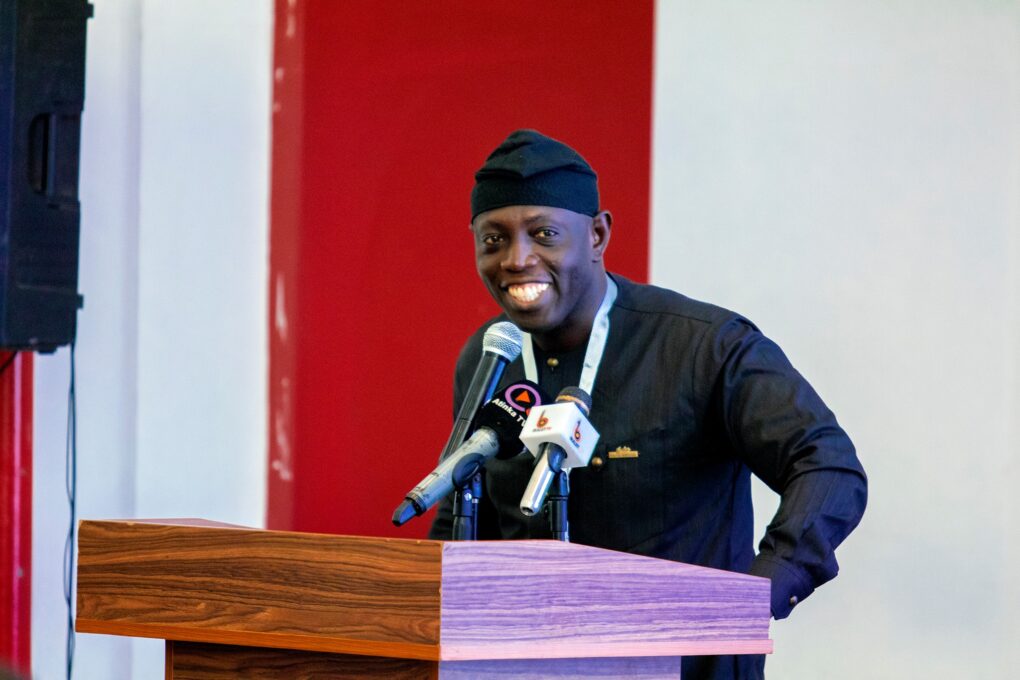
Prof. Isaac Boadi, Executive Director of IERPP, said the reported FDI inflows demonstrate continued investor interest in Ghana despite the country’s economic challenges.
“Certainly, we should acknowledge Ghana’s capacity to draw US$2.62 billion in foreign direct investment,” Prof. Boadi said, adding that the figure suggests international investors still have confidence in Ghana’s economic opportunities.
He, however, stressed that attracting foreign capital should not distract from concerns about how existing economic resources are managed.
IERPP Raises Questions Over GH¢22 Billion DGPP Loss
According to figures discussed recently regarding the Domestic Gold Purchase Programme, the programme reportedly recorded an estimated loss of GH¢22 billion, equivalent to approximately US$1.7 billion.
IERPP said the comparison between the reported US$2.62 billion FDI inflow and the alleged US$1.7 billion DGPP loss highlights the scale of the financial concerns surrounding the programme.
Prof. Boadi explained that the reported loss is equivalent to roughly 65% of Ghana’s FDI inflows.
“Every US$1 that Ghana attracts in FDI, the reported loss under the Domestic Gold Purchase Program is equivalent to about 65 cents,” he observed.
He clarified, however, that the comparison does not mean Ghana’s entire FDI inflow was lost or that GoldBod was solely responsible for the reported US$1.7 billion loss.
Rather, he said the comparison was intended to demonstrate the magnitude of the reported DGPP losses relative to the amount of foreign capital Ghana is attracting.
IERPP Calls for Greater Scrutiny of GoldBod-Related Costs
The Institute stressed the importance of distinguishing between losses attributed to the DGPP as a programme and costs specifically associated with GoldBod.
IERPP noted that the reported US$1.7 billion loss should not be attributed entirely to GoldBod. However, it said GoldBod-related fees, charges and other costs identified as contributing to the programme’s losses should be subjected to public scrutiny.
Prof. Boadi questioned whether enough attention was being paid to the management and protection of resources already available within Ghana’s economy.
The Institute is therefore calling for greater transparency and accountability in Ghana’s gold sector and public financial management.
Foreign Direct Investment Remains Important to Ghana’s Economy
IERPP acknowledged that Foreign Direct Investment remains critical to Ghana’s economic development and transformation.
According to the Institute, FDI can contribute to job creation, technology transfer, productive capacity, infrastructure development and foreign-exchange generation.
However, IERPP stressed that attracting foreign investors cannot replace responsible management of public resources.
Prof. Boadi used the analogy of filling a bucket with water while leaving a large hole at the bottom to illustrate the concern.
He argued that while increasing FDI inflows is positive for the Ghanaian economy, policymakers must also address significant financial leakages and ensure that economic resources are properly managed.
Institute Demands Transparency on DGPP Losses
IERPP is calling for a detailed explanation of the reported DGPP financial losses, including a clear breakdown of:
- The sources of the reported losses
- Costs incurred under the programme
- Revenues generated
- GoldBod-related fees and charges
- The overall fiscal impact on the Government of Ghana
The Institute also urged Parliament, accountability institutions, civil society organisations, think tanks and the media to closely examine the figures surrounding the programme.
Prof. Boadi said Ghana should avoid selectively celebrating economic statistics while overlooking figures that raise concerns about financial losses.
“There should be no selective enthusiasm when it comes to Ghana’s economic numbers,” he stated.
Ghana Needs Both Investment and Accountability
IERPP maintained that sustainable economic growth in Ghana depends not only on attracting international investment but also on building strong institutions and ensuring transparent public financial management.
The Institute said genuine investor confidence requires evidence that Ghana has the institutional capacity to protect public resources, maintain transparency and manage economic programmes effectively.
Prof. Boadi said Ghana should celebrate the reported US$2.62 billion FDI inflow, while simultaneously asking difficult questions about the reported US$1.7 billion loss under the Domestic Gold Purchase Programme.
“Ghana needs both investment and accountability. One without the other cannot deliver sustainable economic transformation,” he concluded.
Source: newsthemegh.com