
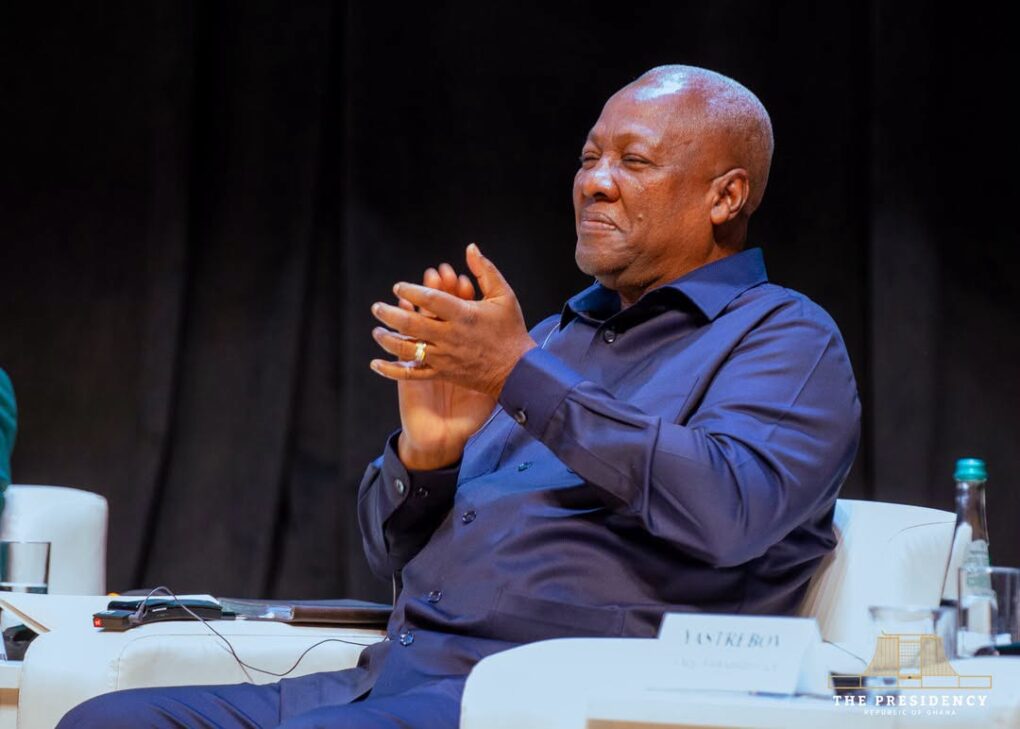
President John Dramani Mahama has welcomed the United Kingdom’s renewed openness to addressing the historical injustices of the transatlantic slave trade, describing the position as an important step towards reparatory justice, reconciliation and healing.
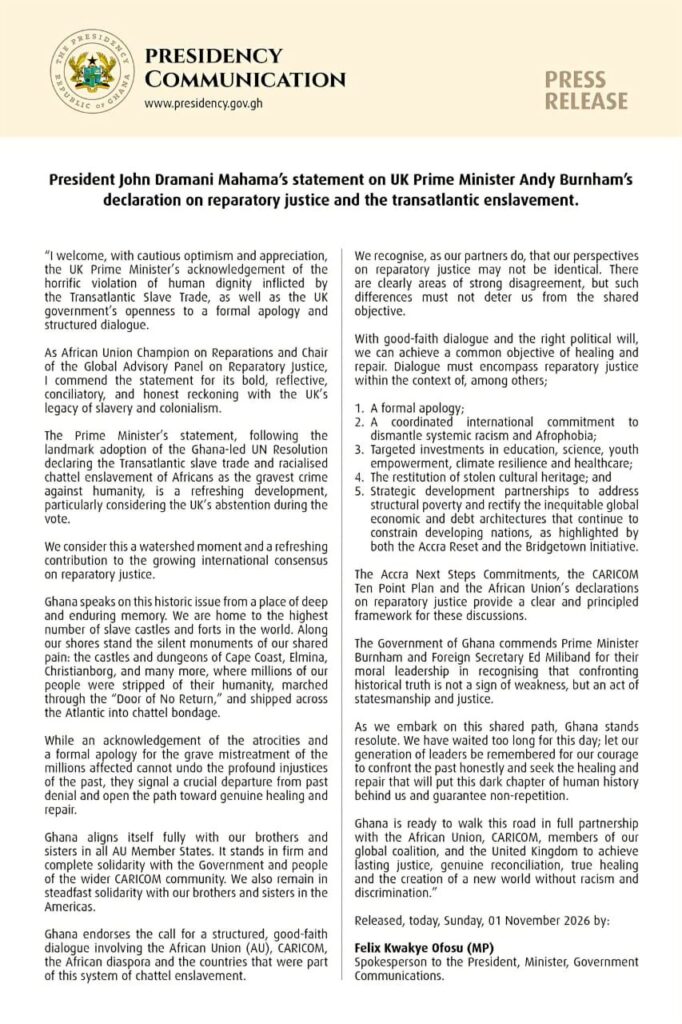
In a statement responding to UK Prime Minister Andy Burnham’s declaration on reparatory justice, President Mahama expressed cautious optimism about the UK government’s willingness to engage in formal dialogue and consider an apology for the atrocities committed during the transatlantic slave trade.
President Mahama, who serves as the African Union Champion on Reparations and Chair of the Global Advisory Panel on Reparatory Justice, commended the UK Prime Minister for acknowledging the devastating impact of slavery and colonialism.
He described the development as a significant contribution to the growing international movement for reparatory justice, particularly following the adoption of a Ghana-led United Nations resolution recognising the enslavement of Africans and the transatlantic slave trade as among the gravest crimes against humanity.
Mahama Calls for Five Key Actions on Reparatory Justice
President Mahama emphasised that acknowledging historical injustices and issuing a formal apology must be accompanied by practical measures to address the lasting consequences of slavery and colonialism.
He identified five key areas requiring international cooperation:
- Formal Apology: An official apology for the atrocities and human suffering caused by the transatlantic slave trade.
- Combating Racism: Coordinated international action against systemic racism, discrimination and Afrophobia.
- Investment in Development: Targeted investments in education, science, youth empowerment, climate resilience and healthcare.
- Restoration of Cultural Heritage: The return of stolen African cultural artefacts and historical treasures.
- Economic Justice: Strategic development partnerships to tackle structural poverty and reform unequal global economic and debt systems affecting developing countries.
Ghana Highlights Its Historical Connection to the Slave Trade
The President noted that Ghana has a special responsibility in the global reparatory justice debate because of its historical connection to the transatlantic slave trade.
Ghana is home to several historic slave forts and castles, including Cape Coast Castle, Elmina Castle and Christiansborg Castle, which serve as reminders of the suffering endured by millions of Africans.
He stressed that acknowledging these historical atrocities and offering a formal apology would represent an important departure from decades of denial and help establish a foundation for genuine reconciliation.
Ghana also reaffirmed its solidarity with African Union member states, CARICOM countries and African diaspora communities in the Americas, calling for structured and meaningful dialogue on reparations.
Ghana Calls for International Cooperation
President Mahama further stated that differences in national perspectives should not prevent countries from working towards a common objective of healing and historical justice.
He identified the Accra Next Steps Commitments, the CARICOM Ten Point Plan and the African Union’s declarations on reparatory justice as important frameworks for advancing discussions.
The President also welcomed the leadership demonstrated by UK Prime Minister Andy Burnham and Foreign Secretary Ed Miliband, stressing that confronting historical injustice is an act of responsible leadership rather than weakness.
Ghana has reaffirmed its readiness to work with the African Union, CARICOM, the United Kingdom and international partners to promote reparatory justice, economic fairness and a world free from racism and discrimination.
The President concluded that the current momentum presents an opportunity to ensure that future generations inherit a more just and equitable world, where the atrocities of the transatlantic slave trade are neither forgotten nor repeated.
Source: newsthemegh.com