
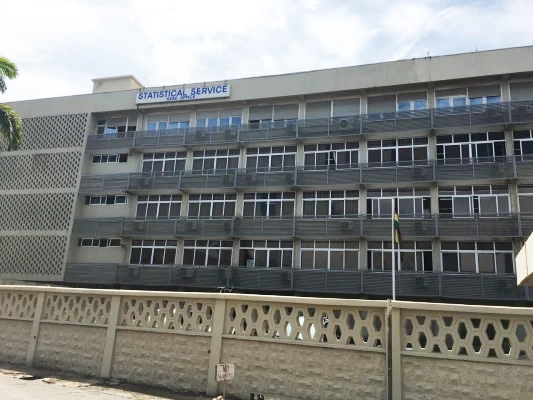
A research on Access to and Quality of Basic and Secondary Education in Ghana (2000-2023) by the Ghana Statistical Service (GSS) found that while trends in quality have varied over time, access to education has increased steadily.
According to the research, both junior high and senior high school English language and math are the subjects where gender disparities in education are most noticeable.
“Gender gaps persist in the quality of education, as measured using core subject pass rates,” the report stated.
It demonstrated that the gender gap was subject-specific and that, although there were differences between the sexes in English and mathematics, there was parity between boys and girls in the sciences and social studies.
For example, in the 2021 West African Senior School Certificate Examination, girls scored higher on the English section (60 percent) than boys (50 percent), while boys (70 percent) performed better in mathematics than girls (60 percent).
Nonetheless, the report said that gender parity had been attained at the elementary level and that gender differences in access to education had diminished over time.
We discovered that the gender gap varies greatly depending on the issue. When he gave a presentation of the report’s highlights yesterday in Accra, Government Statistician Prof. Samuel Kobina Annim stated, “Although we are currently seeing convergence and parity in the case of boys and girls for sciences and Social Studies, we continue to see gaps from the perspectives of English (language) and mathematics, where we see girls performing better in English and boys performing better in Mathematics.”
According to him, a sizable percentage of students at all four educational levels—kindergarten, primary, junior high, and senior high—were older than anticipated.
He said that, in contrast to access to education, the quality of education varied significantly by location.
While some goals have been achieved, Prof. Annim stated that other goals, such as net enrollment, have not yet been reached at any of the four educational levels.
“The last key takeaway is what is happening at the regional level.”
“So, it is not just variations at the regional level but the stark variations from a quality of education point of view,” he stated.
The report’s launcher, Education Minister Haruna Iddrisu, stated that his organization would prefer to rely on professionals in the field of education rather than politicians to provide high-quality instruction.
The Ghana Statistical Service was praised by him for their creative assessment, which used data from the previous 20 years to show which areas the government should prioritize.
Mr. Iddrisu promised that the government would make every effort to guarantee the fair allocation of resources, upgrade the facilities of rural schools, and place more qualified educators in underprivileged areas in order to close regional gaps.
“We have to invest more in teacher training and undertake some curriculum reforms and modern teaching methods to enhance learning outcomes,” the minister further stated.
The Danes Statistical Service and Ghana have a solid relationship, according to a fraternal greeting from Denmark’s ambassador to Ghana, Tom Norring.
The gross enrolment rate (GER) at the kindergarten level more than quadrupled over the past 20 years, from 51.0% to 122.0%, according to the research.
It further claimed that within the same time frame, the net enrolment rate (NER) rose from 34% to 66%.
“At the primary level, about a 20 percentage point increase is recorded for both GER and NER over the two decades.
“In the 2022/23 academic year, less than half of the number of children are within the expected age bracket at the junior high school level, as GER and NER were 98.0 per cent and 47.0 percent, respectively.”
“Gross enrolment rate at the SHS (senior high school) level has nearly tripled from 25.0 per cent in 2005/06 to 72.0 per cent in 2022/23, and NER has about doubled between 2005/06 and 2020/21 from 16.0 per cent to 31.0 per cent,” the report stated.
According to the report, a significantly higher percentage of students at SHS were not of legal age (averaging roughly 50.0% from 2005–06 to 2019–20), closely followed by JHS (averaging roughly 45.0% from 2001–02 to 2019–20), kindergarten (averaging roughly 30.0% from 2003–04 to 2019–20), and primary (averaging roughly 20% from 2001–02 to 2019–20).
According to the research, girls’ kindergarten NER was somewhat greater than boys’, particularly following the 2014–15 peak.
It stated that the NER for boys in primary school had been higher for over ten years, starting in 2001–2002. Parity was then attained until 2019–20, when the NER for girls increased by 2.1 percentage points.
It stated that, in contrast to the data from prior years, the NER for girls in JHS exceeded that of boys starting in 2017–18.
“In 2020, the GER for kindergarten and primary school were below the ESP (education strategic plan) targets by 5.0 and 17.7 percentage points, respectively.”
“Both the 2015 and 2020 ESP targets for gross enrolment at the JHS level recorded shortfalls: 4.6 percentage points and 7.8 percentage points, respectively. The 2020 ESP target for gross enrolment at the SHS level was exceeded by 3.2 percentage points,” it said.
The ESP targets for NER in 2020 were not met across all educational levels, according to the report, with the worst deficits occurring at the kindergarten and primary levels, at 18.6 and 11.7 percentage points, respectively.
“Between 2001/02 and 2019/20, enrolment across all four education levels steadily progressed toward gender parity. By 2022/23, girls outnumbered boys in both senior and junior high schools.”
Gender parity was achieved at the primary level, while kindergarten remained the only level where boys were enrolled in higher numbers than girls.
“Incrementally over the years, from 2001/02 to 2019/20, gender parity (1.0) was recorded for all levels except for kindergarten, which declined to 0.98 in 2022/23, following parity (1.0) in 2005/06 and 2006/07. In the last three years at the SHS level, more girls have been enrolled than boys, with a peak of 1.1 in 2022/23,” it said.
The GER at the kindergarten level more than doubled from 51 percent to 122 percent between 2001 and 2003, according to the report’s trend analysis of enrollment. Primary GER increased from 80 to 90 percent, JHS GER increased from 64 to 98 percent, and SHS GER tripled from 25 to 72 percent.
Significant percentages of students at all four educational levels were not within projected ages, according to figures on NER, which gauge age-appropriate enrollment, even if GER was high.
Kindergarten NER was 66% in 2023, which means that two out of every three children between the ages of four and five were enrolled in kindergarten, while 80% of children between the ages of six and eleven were enrolled in primary school.
Less than half of the pupils between the ages of 12 and 14 were enrolled at the age-appropriate level at the JHS level (47 percent).
Compared to access to education, there were significant regional differences in the quality of education.
For example, the Northern, North East, and Savannah areas have more than 50 students per qualified teacher, which is more than twice as many as Greater Accra, which has 25 students per professional teacher.
The Bono Region had the highest WASSCE Mathematics pass rates in 2019, over five times higher than the North East Region, which had the lowest pass rate. Disparities were also noted in the pass rates for key courses.
Greater differences are seen in English language proficiency, with Bono (75.3%) posting the highest pass rates, more than ten times higher than the North East (5.1%) and Savannah (8.0%) regions.
The event was chaired by Kofi Asare, Executive Director of Africa Education Watch, who stated that he believed the Ghana Education Service’s partnership with the Ministry of Education was crucial in determining “our forward movement towards the last five years of the journey to the end of SDG (Sustainable Development Goal) Four.”
Source: newsthemegh.com