
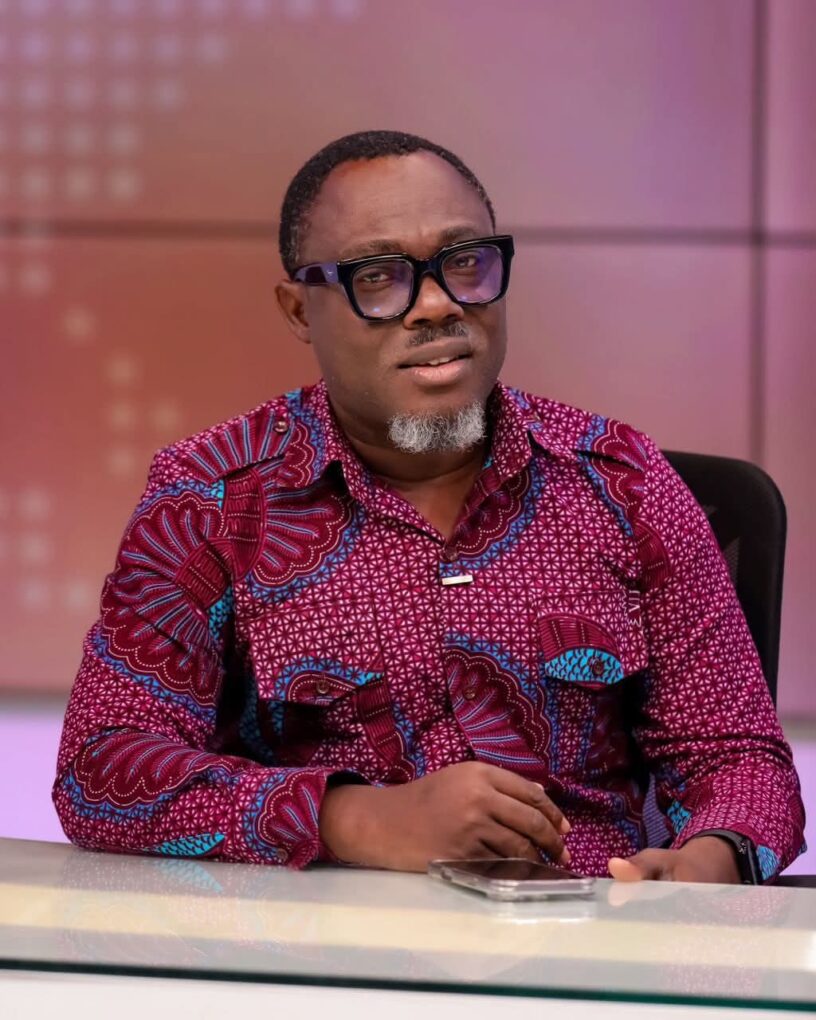
Professor Ransford Gyampo, the Chief Executive Officer of the Ghana Shippers’ Authority, has supported the creation of regional tribunals to handle cases involving economic crimes and corruption, claiming that Ghana’s democracy and peace are at risk due to delays in the administration of justice.
Speaking about the discussion surrounding the planned tribunals on the KeyPoints, Prof. Gyampo stated that it is important to take seriously the long-held notion that “justice delayed is justice denied,” particularly in cases involving economic crimes and corruption.
According to him, studies and public opinion polls have repeatedly brought attention to issues with the nation’s legal system and the length of trials.
Prof. Gyampo stated on July 18 that “We cannot guarantee the survival of Ghana’s Fourth Republic if we do not do something about corruption and economic crime.”
He said that the government’s initiatives to create specialised tribunals could help allay the fears of many Ghanaians who anticipated swift action against corruption prior to the 2024 elections.
“One of the reasons why President Mahama had that massive vote in the 2024 election was the belief and expectation that something drastic would have to be done to address economic crime and corruption,” he said.
Professor Gyampo critiqued the frequent use of the justification that legal proceedings must inevitably be delayed, claiming that such delays can erode public trust and encourage some individuals to look for other forms of justice.
He related a personal story, saying, “My lawyer told me, ‘Prof, at the minimum we will spend two years to have judgement.’ I asked, two years? He recalled, “By the axis of the wheels of justice grinding slowly.”
Although he ultimately decided to forgive, he said that others might not be able to wait for drawn-out legal proceedings.
“Some people who feel they cannot tolerate this cliché that we have fashioned as a people may want to take things into their own hands. And when they do that, we cannot guarantee the survival of our peace and democracy,” he cautioned.
Prof. Gyampo contended that the proposed tribunals differ from those set up during the PNDC era, citing the 1992 Constitution as the source of the current proposal’s power.
The Greater Accra Region is now engaged in a nationwide cleanup exercise.
He said that in contrast to the earlier tribunals, the new ones would allow for appeals, operate under constitutional protections, and concentrate exclusively on economic crimes and corruption.
“The tribunals that are to be established now find their roots in constitutional provisions. They are not the same as those established during the revolutionary era,” he said.
He added that, in comparison to earlier tribunals, the current system offers more robust human rights protections.
Prof. Gyampo addressed concerns regarding non-lawyers serving on tribunal panels by citing other jurisdictions’ jury systems to support the involvement of common people.
“If we believe in trial by jury, then we should not suddenly be apprehensive when other people who are not lawyers sit and comment on your conduct,” he said.
He continued by saying that people who are aware of the community’s context might occasionally provide insightful viewpoints on the administration of justice.
However, Prof. Gyampo suggested that in order to prevent the tribunals from undermining justice and constitutional rights, concerns expressed about them must be addressed.
“If there are fears, we should be mindful of them so that as we pursue this agenda, we ensure those fears do not manifest,” he stated.
He came to the conclusion that if the tribunals assisted in recovering stolen public resources and expedited the administration of justice without jeopardising the rights of those accused, he would support them.
“If this would facilitate the recovery of all loots and ensure quick dispensation of justice without compromising human rights, then I think we are in a good place,” he concluded.
Source: newsthemegh.com