

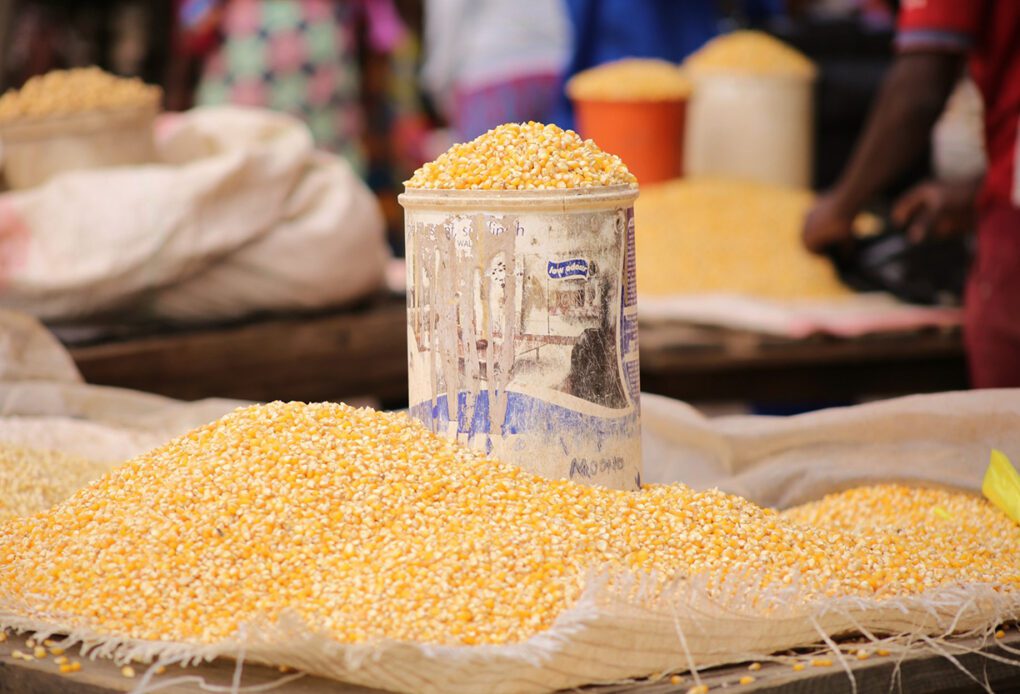
Farmers now have the choice to sell directly to the National Food Buffer Stock Company at set prices thanks to the Ministry of Food and Agriculture’s introduction of minimum guaranteed farmgate pricing for three staple commodities.
A 100-kilogram bag of maize will cost GH¢450 under the new arrangement, a 50-kg bag of rice GH¢625, and a 34-kg bag of gari GH¢340.
For maize, rice, and gari, this corresponds to GH¢4.50, GH¢12.50, and GH¢10 per kilogramme, respectively.
On September 29, 2025, the ministry’s Public Relations Office released a statement that included the announcement.
Following its inauguration earlier this month, the Producer Price Determination Committee held its first meeting from September 11 to 12, at which the prices were approved.
The government claims that the guaranteed prices are meant to stabilise the agricultural value chain, address the issue of unsold surplus grains, and give farmers fair compensation.
It is urged that farmers not sell at prices lower than those that have been publicised.
“Any farmer experiencing difficulties with buyers who attempt to purchase below the guaranteed prices should sell their stock directly to NAFCO, where they will be assured of the approved price,” the statement declared.
The ministry went on to say that the actions should improve national food security, preserve the grain market, and protect farmer livelihoods.
The National Food Security Reserve was revived by establishing the Producer Price Determination Committee to set the price of certain agricultural commodities.
The Ministry of Food and Agriculture, NAFCO, the World Food Programme, the Peasant Farmers Association, the Poultry Farmers Association, the Feed Ghana Secretariat, and the Network of Commercial Agricultural Production are among the ten members of the group.
President John Dramani Mahama stated earlier this year that the government will provide NAFCO GH¢100 million to revitalise the national food security reserve, which had been dormant for a few years.
In order to be ready for shortages, calamities, or other situations, NAFCO is supposed to stockpile extra maize, rice, and gari.
Additionally, it will lessen farmers’ post-harvest losses and stabilise prices during lean seasons.
Source: newsthemegh.com