
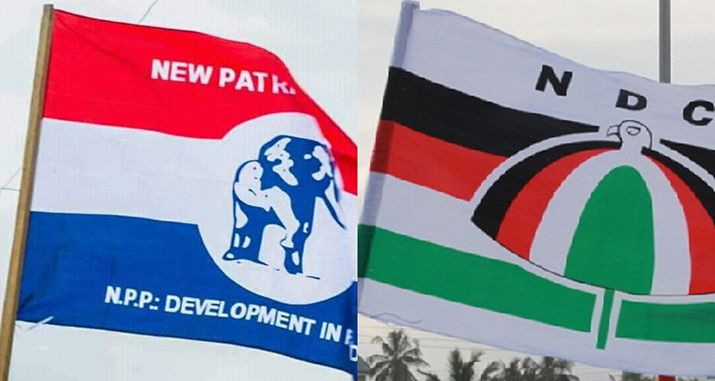
By a majority vote of 5 to 2, the Supreme Court ruled that all registered members of political parties in good standing should be able to cast ballots in the election of their leaders and candidates.
A “one member, one vote” method for internal party elections is made possible by the ruling, which essentially overturns the long-standing delegate system used by Ghana’s major political parties.
Future presidential, legislative, and executive primaries as well as the structure of political parties are anticipated to be significantly impacted by the decision.
On Wednesday, July 29, a seven-member panel rendered the decision, ending a constitutional challenge that had sparked a heated legal and political discussion about the level of democratic involvement within political parties.
Former Environment, Science, Technology, and Innovation Minister Professor Kwabena Frimpong-Boateng, seasoned politician Dr. Nyaho Nyaho-Tamakloe, and former Lands and Forestry Minister Dr. Christine Amoako-Nuamah filed the lawsuit.
They contended that Ghana’s 1992 Constitution’s democratic ideals were incompatible with limiting voting rights to a small number of delegates.
Delegate-based electoral colleges have been used for decades by Ghana’s major political parties, such as the Convention People’s Party (CPP), the National Democratic Congress (NDC), and the New Patriotic Party (NPP), to choose national executives, parliamentary candidates, and presidential candidates.
The vast majority of regular members were not given a direct say in selecting party leadership under the setup, which reserved voting rights for accredited delegates, constituency officers, and chosen party executives.
The plaintiffs argued that by giving election rights to a privileged few while barring regular members in good standing, the arrangement led to inequity among party members.
They argued that widespread participation in internal elections is a constitutional requirement since political parties, as organisations recognised under Article 55 of the Constitution, must organise and function in accordance with democratic principles.
The Attorney General’s Department also requested the Supreme Court to take a “one member, one vote” stance in favour of the challenge.
According to the state, political parties have a significant public role in Ghana’s democratic system, and their internal electoral procedures ought to uphold the principles of equality, participation, and universal suffrage found in the constitution.
The Attorney-General further argued that granting all registered members the option to vote would improve internal democracy and accountability.
Declarations that the delegate systems found in the NPP, NDC, and CPP constitutions were unconstitutional and orders requiring the parties to amend their constitutions to permit equal, direct, and meaningful participation by all members in good standing were among the reliefs sought by the plaintiffs.
Additionally, they requested guidelines mandating that the Electoral Commission make sure political party constitutions adhere to the Political Parties Act and the Constitution’s democratic provisions.
Source: newsthemegh.com