

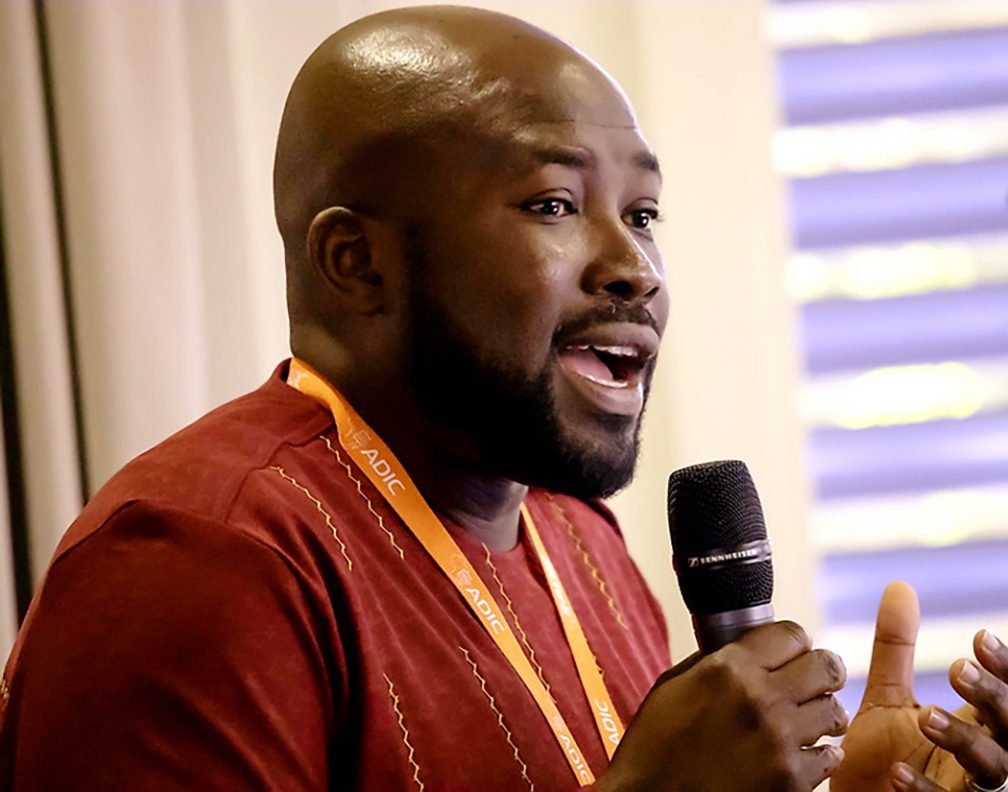
Senyo Hosi, a prominent figure in the One Ghana Movement and the Ghana Coalition Against unlawful Mining, has issued a grim warning, stating that unlawful mining, or galamsey, is the primary cause of Ghana’s impending catastrophic water catastrophe.
In an interview with Joy News’ PM Express on September 23, 2025, Hosi bemoaned the widespread river contamination in the nation and emphasised that Ghana is currently forced to import potable water.
“If this president will not do it, then we are hopeless,” he added, expressing his profound dissatisfaction with the way the administration has handled the problem.
The extent of the destruction is striking. Mercury, cyanide, and other toxic chemicals used in illegal gold mining have contaminated once-reliable rivers including the Pra, Ankobra, and Offin.
These rivers have historically high levels of turbidity, according to the Ghana Water Company Limited, making treatment all but impossible. Authorities have issued warnings about impending plant closures that will deny clean drinking water to large communities.
The effects go beyond the lack of water. In communities affected by mining, medical professionals attribute an increase in chronic illnesses like kidney failure, cancer, and birth defects to the hazardous pollution.
The disappearance of confiscated mining equipment, accusations of corruption, and a lack of political will have all hampered progress despite multiple government programs and military interventions.
Public fury has been stoked by the unwillingness to take immediate action, with many expressing concern that Ghana’s natural riches are being looted without consequence.
Dennis Miracles Aboagye, former Vice President Dr Mahamudu Bawumia’s adviser, recently brought attention to the pervasive effects of galamsey during a media tour in Agona Kwanyako in the Agona East District, which heightened the already mounting alarm.
He disclosed that despite the district’s lack of mining history, unlawful operations in the Eastern Region are seriously contaminating the water supply for its population.
Eleven districts now lack access to clean water due to the closure of the local treatment plant due to the extreme pollution of the Ayensu River, which provides water to Agona East and the neighbouring communities.
Aboagye challenged authorities to keep their campaign pledges and chastised the current administration for its lack of decisive action.
He emphasised that there was proof of pollution “right in the home of the Minister for Government Communications, Felix Kwakye Ofosu,” who recently requested empirical proof from those who claimed that galamsey got worse under President Mahama’s government.
According to Aboagye, who cited data from the Water Resources Commission, 40 of 41 water sources were classified as “fairly good” in 2010.
However, water quality drastically declined between 2012 and 2016, with 60–70% of sampling locations receiving a “poor” rating.
He asserted that since 2017, when 14 of the 25 damaged water systems were restored, progress had been made under the NPP administration.
Aboagye came to the conclusion that the opposition NDC’s record on water quality was unmistakable and urged the current government to stop assigning blame and instead concentrate on finding a solution to the situation that is endangering the lives of millions of Ghanaians.
Source: newsthemegh.com