

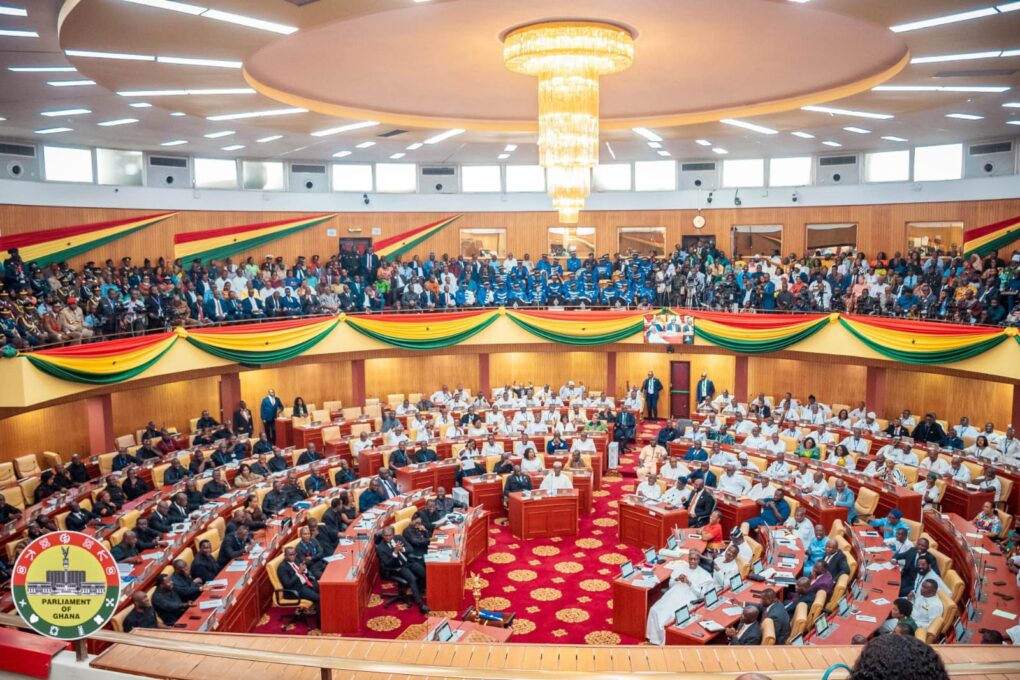
Even after the House enacted the controversial Road Traffic (Amendment) Bill, 2025, often known as the Okada Bill, the Minority in Parliament continued to oppose the legalization of okada, or commercial motorcycle transport.
The law represents a significant revision of Ghana’s transportation and traffic safety laws.
The Road Traffic Act of 2004 (Act 683) is amended by the new law, which also establishes mandatory emission testing, updates the alcohol limits for drivers, and regulates the commercial use of motorcycles, tricycles, and quadricycles.
Its main objectives are to improve road safety, increase youth employment possibilities, and offer a thorough regulatory framework for a changing transportation industry.
The bill’s formal regulation of motorcycles, tricycles, and quadricycles for ride-hailing services and fare-paying passenger services is a key component that brings national transportation policy into line with contemporary mobility trends.
The Minority claims that President John Mahama’s effort for the law’s approval was motivated more by the desire to uphold a manifesto vow than by a sincere pursuit of road safety reform, notwithstanding the fact that the bill has increased political tensions.
They contend that the law puts political benefit ahead of deep stakeholder involvement.
Citing increased safety risks, an increase in traffic accidents, and security issues related to commercial motorcycle activity, the New Patriotic Party (NPP) has continuously resisted legalizing okada.
Instead of justifying what they saw as a dangerous endeavor, the party promised during the 2020 election cycle to provide riders with alternate means of subsistence, such as access to hire-purchase cars.
On Thursday, December 11, 2025, the Okada Bill was introduced and approved by the ruling National Democratic Congress (NDC) parliamentary majority in spite of these reservations.
The legislation was defended by government MPs, who emphasized its potential to increase road safety, lower alcohol-related accidents, and open up new employment prospects for young Ghanaians looking for work in the growing ride-hailing and motorbike transport industries.
In order to properly manage these rapidly expanding mobility sectors, Second Deputy Majority Whip Richard Acheampong emphasized the significance of a comprehensive regulatory framework.
Source: newsthemegh.com