
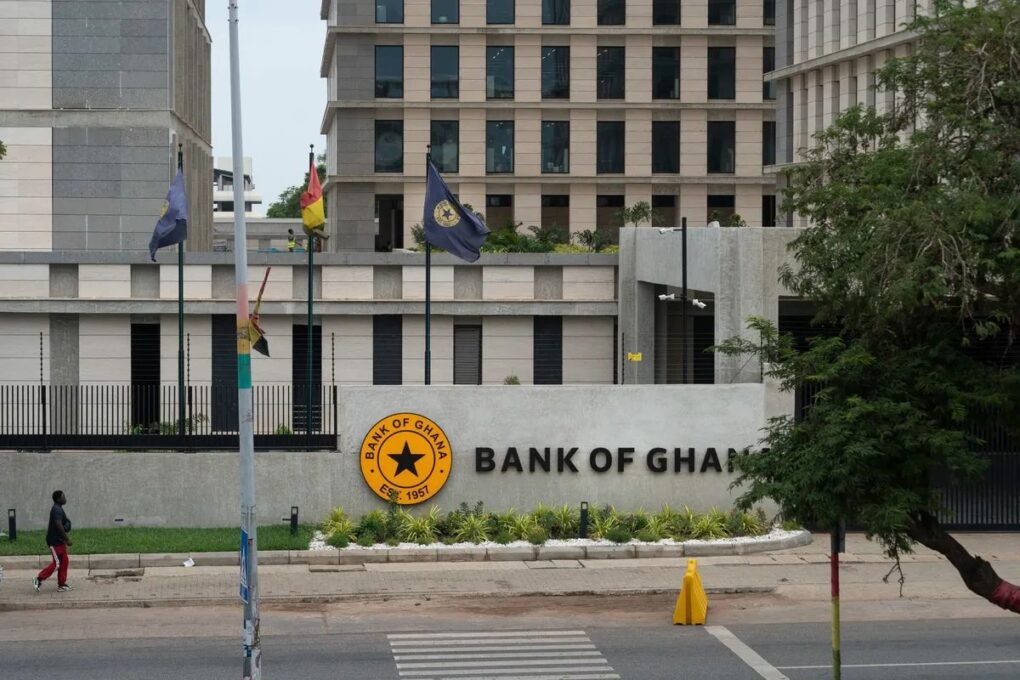
The Bank of Ghana (BoG) recorded a significant increase in personnel costs between 2022 and 2025, with expenditure on employees more than doubling during the three-year period despite a much smaller increase in the central bank’s workforce.
According to the Bank of Ghana’s annual reports and audited financial statements, personnel costs rose from GH¢1.62 billion in 2022 to GH¢3.29 billion in 2025, representing an increase of approximately 103%.
Over the same period, the number of reported employees increased from 2,206 to 2,691, equivalent to approximately 22% growth.
The figures highlight a widening gap between the growth in the Bank of Ghana workforce and the cost of maintaining its employees.
Bank of Ghana Personnel Costs Rise Between 2021 and 2025
BoG’s personnel expenditure has increased consistently in recent years.
Personnel costs rose from GH¢1.26 billion in 2021 to GH¢1.62 billion in 2022. The figure increased further to GH¢1.96 billion in 2023 and GH¢2.28 billion in 2024.
The biggest annual increase occurred in 2025, when personnel costs jumped by approximately 44.4%, from GH¢2.28 billion to GH¢3.29 billion.
The increase occurred alongside a rise in the number of employees, although the workforce expanded at a considerably slower pace.

BoG Staff Strength Increases
The Bank of Ghana’s human resources report shows that staff strength increased from 2,368 employees in 2024 to 2,691 in 2025, representing a 13.6% increase in one year.
The central bank reported that it recruited 395 employees during the year, while 72 employees exited, resulting in a net increase of 323 workers.
This suggests that the growth in the size of the workforce accounts for only part of the increase in BoG personnel expenditure.
Personnel Cost Per Employee
Another way of examining the trend is to compare personnel expenditure with reported year-end staff numbers.
In 2022, personnel costs amounted to approximately GH¢735,000 per reported employee. By 2025, the figure had risen to about GH¢1.22 million, representing an increase of roughly 66%.
However, this calculation should not be regarded as the average salary of a Bank of Ghana employee.
Personnel costs are an accounting expense category and can include salaries, pensions, allowances and other employee-related expenses. The bank’s published financial statements do not provide sufficient detail to determine precisely how the increase was distributed across these components.
Personnel Costs Become Larger Part of BoG Operating Expenses
The increase in employee-related expenditure is also reflected in the Bank of Ghana’s broader operating expenses.
The central bank reported GH¢5.22 billion in other operating expenses in 2025, compared with GH¢4.10 billion in 2024.
Personnel costs accounted for approximately 63% of the 2025 figure, compared with about 56% in the previous year.
The GH¢1.01 billion increase in personnel costs represented roughly 90% of the year-on-year increase in the broader operating-expense category.
This makes personnel expenditure an increasingly significant component of the Bank of Ghana’s operating cost structure.
Discrepancy in BoG Staff Figures
There is also a difference between two staff figures contained in the Bank of Ghana’s 2025 Annual Report.
The human resources section records 2,691 employees as of December 2025, while the audited financial statements report 2,672 employees for the same period.
The difference of 19 employees does not materially change the overall trend, but greater consistency in the bank’s published reports could provide additional clarity for the public and financial analysts.
Why Are Bank of Ghana Personnel Costs Rising?
The composition of the rising personnel costs remains an important issue.
Bank of Ghana Governor Dr Johnson Asiama, speaking to Graphic Business, provided context for the increase and pointed to changes in the central bank’s responsibilities and the need to recruit employees with specialised skills.
According to the Governor, the bank has expanded its focus to areas including virtual assets, data analytics, artificial intelligence and cybersecurity monitoring as Ghana’s financial sector becomes increasingly technology-driven.
These emerging responsibilities require employees with specialised technical and financial skills.
Dr Asiama also explained that the Bank of Ghana needs to recruit employees to replace workers who retire. He indicated that between 54 and 60 employees retire from the central bank each year, making recruitment necessary even when there is no significant expansion in the overall workforce.
Cost of Retaining Skilled Employees
The Governor also pointed to the growing cost of attracting and retaining specialised professionals.
According to Dr Asiama, the Bank of Ghana must remain competitive in its remuneration packages because employees with expertise in technology, data analytics and fintech may have opportunities to work for other organisations.
This provides one possible explanation for why personnel costs have increased more rapidly than the number of employees.
Between 2022 and 2025, the BoG workforce increased by approximately 22%, while personnel costs rose by about 103%.
The Governor’s explanation links the difference partly to the recruitment of specialised professionals, replacement of retiring employees and the need to retain skilled workers.
However, the published financial figures do not separately show how much of the GH¢1.67 billion increase in personnel costs over the period resulted from new employees, salary adjustments, pensions, allowances or other employee-related expenses.
BoG Expects Slower Recruitment Growth
Dr Asiama has also indicated that the pace of recruitment is expected to moderate following the significant hiring exercise undertaken in 2025.
The Governor said the Bank of Ghana expects personnel costs to grow at a slower rate from 2026, with future recruitment expected to be more closely aligned with annual staff retirements.
He also argued that personnel expenditure should be considered in relation to the bank’s overall operational costs rather than viewed solely as an absolute figure.
According to Dr Asiama, the Bank of Ghana uses an internal benchmark under which personnel costs should not exceed 40% of operational costs, and he maintained that the current level remains below that threshold.
However, clearer disclosure of the specific operational-cost base used to calculate this benchmark would allow stakeholders to independently assess the ratio.
Bank of Ghana Personnel Costs Under Scrutiny
The available financial data show a substantial increase in the cost of maintaining the Bank of Ghana workforce between 2022 and 2025.
While staff numbers increased by about one-fifth, personnel costs more than doubled during the same period.
The Governor has attributed the increase to factors including recruitment, employee retirements, new regulatory and technological responsibilities, and competition for specialised skills.
The next Bank of Ghana annual financial statements will provide an opportunity to determine whether the expected slowdown in recruitment results in slower growth in personnel expenditure.
Greater disclosure of the components of personnel costs could also help the public, policymakers and financial analysts better understand the factors driving the central bank’s rising employee-related expenses.
Source: newsthemegh.com