
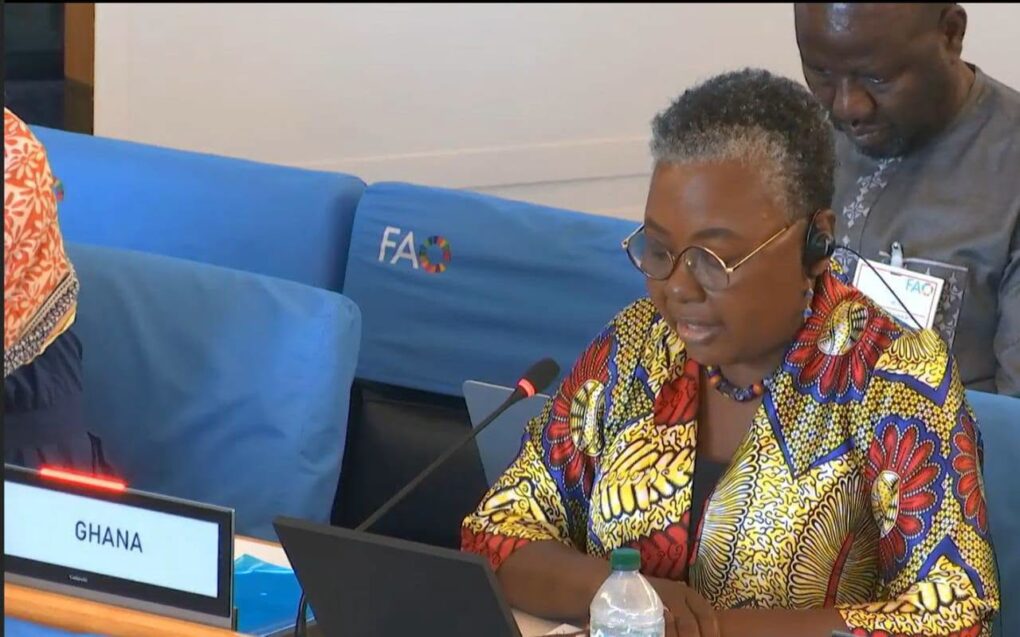
Ghana’s Minister for Fisheries and Aquaculture, Hon. Emelia Arthur (MP), has called for stronger global action to transform ocean governance and increase sustainable aquatic food production across Africa.
Speaking at the 37th Session of the FAO Committee on Fisheries (COFI) in Rome, Minister Arthur urged global leaders to support Africa with the investment, technology and scientific expertise needed to unlock the continent’s enormous fisheries and aquaculture potential.
She said Africa has both the capacity and responsibility to expand sustainable fish production as part of efforts to address food insecurity, create jobs and strengthen the blue economy in developing countries.
Minister Arthur aligned Ghana’s fisheries agenda with the United Nations Food and Agriculture Organization (FAO) Blue Transformation Agenda, stressing the need to turn scientific research into practical policies and investments that can deliver sustainable development.
“Africa’s aquatic food production should—and can—be increased,” she said, calling for greater international support for Africa’s fisheries and aquaculture sectors.

Fisheries Critical to Ghana’s Food Security
The fisheries and aquaculture industry remains a major contributor to Ghana’s food security, employment and coastal livelihoods, with millions of people depending on the sector directly or indirectly.
More than 3 million Ghanaians are estimated to depend on the fisheries and aquaculture value chain, while aquatic foods provide approximately 60% of animal protein consumed in Ghana.
Ghana’s annual per capita fish consumption is estimated at between 20 and 25 kilogrammes, highlighting the importance of fisheries to household nutrition and the national economy.
Marine fish production also increased to approximately 442,000 metric tonnes in 2024, compared with about 425,000 metric tonnes in 2023.
However, Ghana continues to face challenges in its inland fisheries sector, where freshwater fish production has been affected by illegal fishing, overfishing, destruction of aquatic habitats and climate change.
Ghana Strengthens Fisheries and Aquaculture Regulations
To address the environmental and economic challenges facing the industry, Ghana has embarked on major reforms aimed at improving fisheries management, marine conservation and sustainable aquaculture development.
One of the key reforms is the Fisheries and Aquaculture Act, 2025 (Act 1146), which seeks to strengthen maritime enforcement, establish dedicated aquaculture zones and provide greater protection for small-scale fishers.
Under the legislation, Ghana has expanded the Inshore Exclusion Zone from six to 12 nautical miles, helping protect artisanal fishing communities from competition and incursions by industrial trawlers.
The government has also established the Greater Cape Three Points Marine Protected Area (MPA). Created in April 2026, the 704-square-kilometre marine reserve is designed to protect biodiversity while supporting the livelihoods of communities along the coast.

Ghana Steps Up Fight Against Illegal Fishing
The government is also intensifying efforts to combat illegal, unreported and unregulated (IUU) fishing, which remains one of the major threats to Ghana’s marine resources.
Measures include increased electronic monitoring of fishing vessels, enforcement of closed fishing seasons and continued engagement with the European Union through the Ghana-EU IUU Dialogue Process.
The initiatives are intended to strengthen fisheries governance, improve compliance and protect Ghana’s marine resources for future generations.
Supporting Women and Youth in the Fisheries Sector
Ghana is further implementing a National Plan of Action for Small-Scale Fisheries, developed in partnership with the FAO and the Fisheries Transparency Initiative (FiTI).
The plan is expected to improve access to finance, technology and markets for young people and women involved in fish processing and other activities across the fisheries value chain.
By expanding economic opportunities within the sector, the government hopes to promote inclusive growth while strengthening the contribution of fisheries and aquaculture to Ghana’s economy.

Ghana Unveils Long-Term Blue Economy Vision
Minister Emelia Arthur also highlighted Ghana’s 10-year Blue Economy Action Plan, which places sustainable aquaculture at the centre of the country’s strategy for job creation, food security, climate resilience and economic development.
The plan forms part of Ghana’s broader efforts to build a sustainable blue economy capable of generating employment while protecting marine and freshwater ecosystems.
Concluding her address in Rome, Minister Arthur called for stronger international partnerships to support Africa’s fisheries transformation.
She stressed that West Africa has the potential to demonstrate how scientific research, effective fisheries enforcement and community participation can create a sustainable ocean economy capable of feeding millions of people without exhausting the region’s marine resources.
Source: newsthemegh.com