
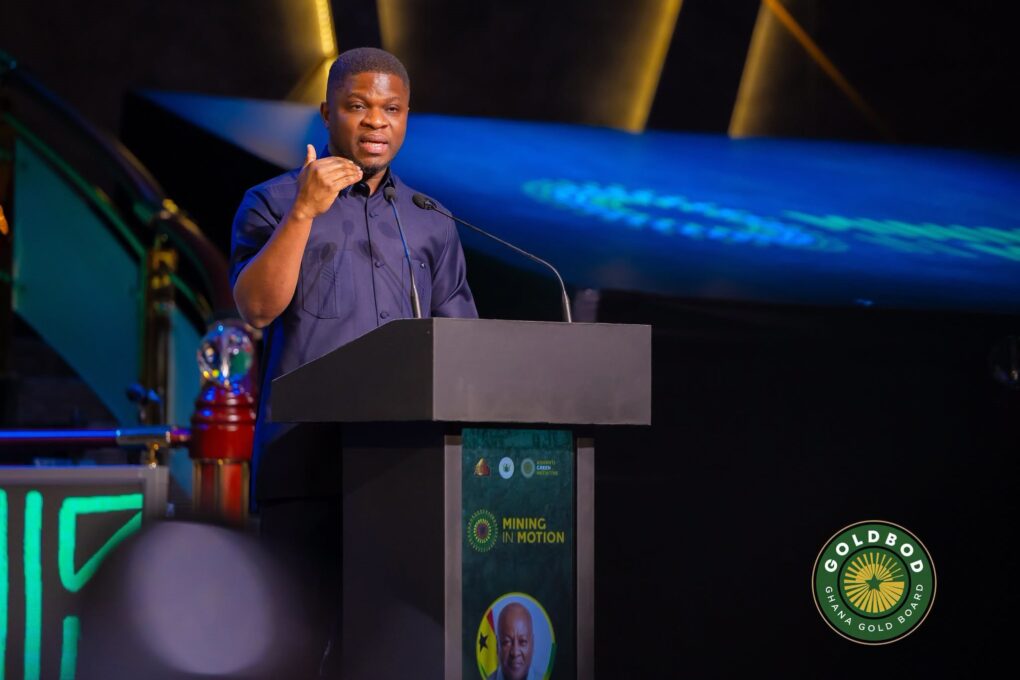
The Ghana Gold Board (GoldBod) is advocating greater Ghanaian ownership of mining assets to ensure the country derives more economic benefits from its mineral resources.
The board wants Ghana to move beyond relying on mining royalties and free-carried interests towards equity participation in sustainable mining ventures.
GoldBod Chief Executive Officer Sammy Gyamfi made the call at the African Minerals Policy Forum – Mining in Motion 2026. He stressed that Ghana must strengthen local participation in mine ownership, financing, engineering, gold processing and refining to achieve genuine mineral sovereignty.
According to Gyamfi, Ghanaian businesses and young professionals should have greater opportunities to become mine owners, geologists, engineers, equipment suppliers, financiers, processors, refiners and gold traders. He warned that the country’s mineral wealth would not deliver its full potential if financing, technology and high-value mining activities remained under foreign control.
GoldBod Records US$11.6 Billion in Small-Scale Gold Exports
GoldBod’s reforms are also improving the formalisation of Ghana’s gold trading sector and increasing the country’s foreign exchange earnings.
Between January 1 and October 20, 2026, the board aggregated and exported 85.4 tonnes of artisanal and small-scale mining (ASM) gold valued at US$11.6 billion. This exceeded large-scale gold exports, which totalled 76 tonnes worth US$11.1 billion during the same period.
Gyamfi attributed the growth to measures designed to reduce gold smuggling and informal trading. These include a four-tier licensing system, competitive gold pricing, digital stock-booking systems, official receipts and stronger regulatory enforcement.
The reforms have contributed to an increase in recorded small-scale gold exports from 63 tonnes in 2024 to approximately 104 tonnes in 2025, generating an estimated US$10.8 billion in foreign exchange.
GoldBod Reforms Create Nearly 5,000 Jobs
Beyond boosting gold exports, GoldBod is working to expand Ghanaian participation across the entire mining and gold value chain.
According to Gyamfi, the board’s institutional reforms, licensing framework and value-addition initiatives have created 4,866 direct jobs in less than two years. These comprise 361 public-sector jobs and 4,505 private-sector positions.
Expanding local participation in gold processing, refining, mining equipment supply and related services could create additional employment opportunities, support indigenous businesses and strengthen Ghana’s mining industry.
The initiative forms part of broader efforts to ensure that Ghana retains more value from its gold and other mineral resources through local investment, industrial development and job creation.
Greater Ghanaian ownership of mining assets could also strengthen economic independence, improve skills development and create opportunities for young professionals in the country’s mining sector.
Source: newsthemegh.com