
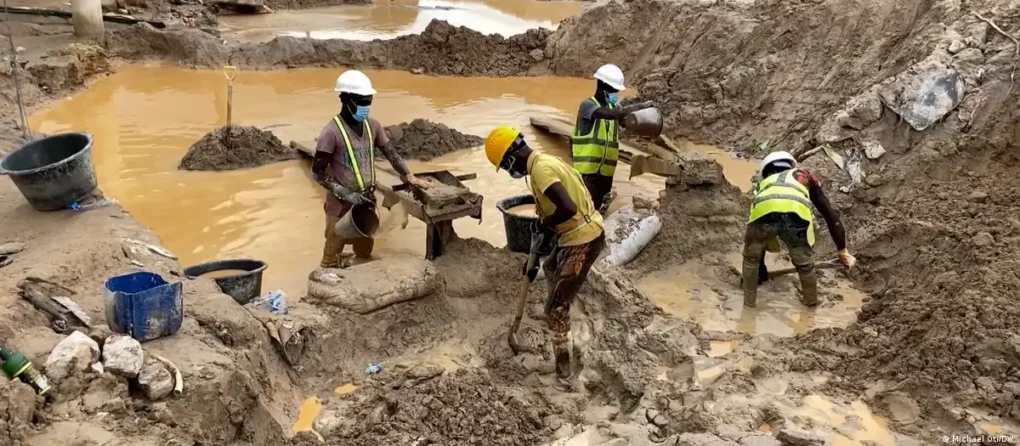
The Government of Ghana has introduced additional policy measures to strengthen the implementation of the country’s contract mining policy, with a strong emphasis on protecting workers’ salaries, benefits, and conditions of service.
In a policy announcement, the Ministry of Lands and Natural Resources said the new directives are intended to ensure that the transition from owner-operated mining to contract mining does not negatively affect Ghanaian workers. The measures also seek to promote local participation, improve transparency, and strengthen compliance with Ghana’s mining regulations.
Ghanaian Companies to Lead Contract Mining Operations
Under the government’s contract mining policy, indigenous Ghanaian companies are required to undertake contract mining services for surface mining operations.
For underground mining operations, contract mining must be conducted through partnerships in which a Ghanaian-owned company holds at least a 50 per cent ownership interest.
The requirement was incorporated into the sixth edition of Ghana’s Local Procurement List, which took effect on January 1, 2025, under the Minerals and Mining (Local Content and Local Participation) Regulations, 2020 (L.I. 2431).
According to the Ministry, most multinational mining companies operating in Ghana have successfully adjusted their operations to comply with the local content requirements.
The government says the policy is designed to increase opportunities for Ghanaian mining companies, promote local investment, and ensure that more economic benefits from the mining industry remain within the country.
Government Addresses Concerns Over Mining Workers’ Salaries
Despite the progress made in implementing the contract mining policy, concerns have emerged over its potential impact on workers’ wages, allowances, benefits, and employment conditions.
The Ghana Mineworkers’ Union, human resource professionals, and other industry stakeholders have raised questions about the possible effects of the transition on employees working in the mining sector.
In response, the Ministry of Lands and Natural Resources and the Minerals Commission have held extensive consultations with union leaders, industry experts, and other relevant stakeholders.
The government has reaffirmed its commitment to ensuring that no worker is disadvantaged because of the transition from owner mining to contract mining.
Under the policy safeguards, Ghanaian workers engaged in contract mining must receive salaries, wages, allowances, benefits, and incentives equivalent to those provided to workers performing comparable duties under owner-operated mining arrangements before the transition.
Three Major Measures to Protect Mining Industry Workers
To strengthen the implementation of the contract mining policy, the government has directed the Minerals Commission to enforce three key measures.
1. Protection of workers’ wages and employment benefits
Mining contractors and similar service providers must not reduce workers’ salaries, wages, entitlements, allowances, benefits, or conditions of service as a result of the transition to contract mining.
2. Harmonisation of salaries and conditions of service
The Minerals Commission is expected to take the necessary steps to harmonise salaries, wages, and employment conditions across the mining industry’s value chain.
The measure is intended to promote fairness and consistency for workers performing comparable duties across different mining operations and service providers.
3. Classification of eligible mining contractors
Mining contractors will be categorised according to their capacity to deliver mining-related services.
This approach is expected to help establish clearer standards for contractors, improve industry oversight, and support the effective implementation of Ghana’s local content policy.
Minerals Commission Given November 30, 2026 Deadline
The government has directed the Minerals Commission to complete all necessary processes for implementing the additional policy measures and submit the required documents for approval by November 30, 2026.
The new directives will complement existing legal and regulatory requirements under the Minerals and Mining (Local Content and Local Participation) Regulations, 2020 (L.I. 2431).
The Ministry also maintains that the Minerals Commission retains the authority to take further lawful action necessary to advance local content objectives and strengthen Ghanaian participation in the mining sector.
Government Declares Zero Tolerance for Unfair Mining Practices
The Ministry of Lands and Natural Resources has reiterated the government’s commitment to fair competition, transparency, and the protection of Ghanaian workers under President John Dramani Mahama’s Reset Agenda.
The government has declared zero tolerance for unfair labour practices, cartelisation, bid rigging, fronting, and other activities that undermine local content requirements or disadvantage Ghanaian workers.
The policy seeks to ensure that Ghanaian companies benefit from opportunities in the mining industry while workers continue to enjoy fair wages and appropriate employment benefits.
By strengthening regulatory enforcement and promoting genuine Ghanaian participation, the government aims to build a more transparent, competitive, and inclusive mining industry.
What the New Contract Mining Policy Means for Ghana
The latest policy directive represents another step towards strengthening Ghana’s local content framework in the mining sector.
For indigenous mining companies, the measures could create opportunities to expand their participation in surface and underground mining services. For employees, the government’s directives provide safeguards against reductions in wages, allowances, benefits, and conditions of service linked to the transition.
The success of the policy will depend on effective enforcement by the Minerals Commission, compliance by mining companies and contractors, and continued engagement with workers’ unions and other stakeholders.
As the November 30, 2026 deadline approaches, attention will focus on the implementation process and the government’s ability to balance local business participation with workers’ welfare and operational efficiency.


Source: newsthemegh.com