
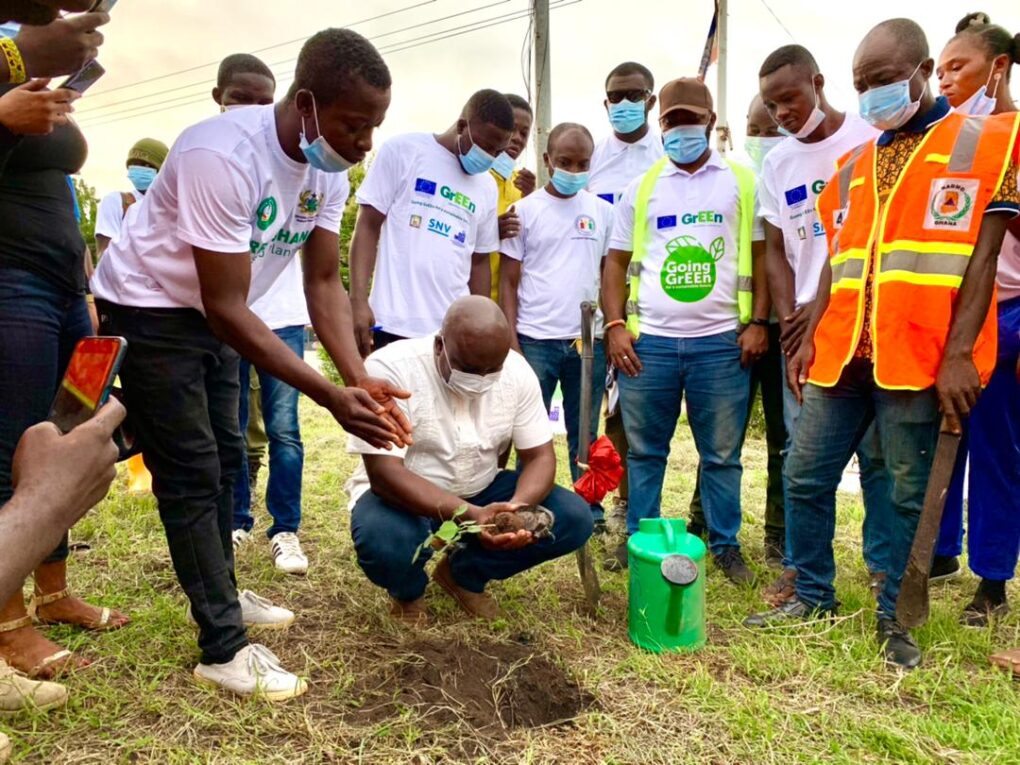
About 90 per cent of seedlings planted at some locations in Ghana’s Upper East Region under the Green Ghana Project have reportedly failed to survive, according to an investigation by the Daily Graphic.
The findings emerged from field visits to selected tree-planting sites five years after the launch of the Green Ghana Project, revealing concerns about seedling management, planting methods, post-planting maintenance and monitoring.
The investigation found that only 143 out of 1,900 seedlings planted across three communities in the Upper East Region survived, representing a survival rate of approximately 7.5 per cent. This contrasts with survival figures of between 60 and 80 per cent previously cited by the Ministry of Lands and Natural Resources.

Green Ghana Project and Environmental Conservation
The Green Ghana Project was launched in 2021 by the Ministry of Lands and Natural Resources as a national tree-planting initiative aimed at restoring degraded forest cover, combating deforestation and improving Ghana’s environment.
The programme was also designed to support local communities by creating economic and livelihood opportunities, including through the involvement of Local Seedling Suppliers (LSSs). Between 2021 and 2024, the project targeted about 50 million trees and reportedly planted approximately 52 million seedlings at an estimated cost of GH¢226 million, according to the Auditor-General’s report.
The seedlings were planted in several locations, including degraded forest reserves, mined-out areas, communal lands, woodlots, schools, road medians, homes and churches. Species included teak, shea, mahogany, Wawa, rosewood, neem, cassia and cashew.
The Forestry Commission was responsible for implementing the project, with members of the Youth in Afforestation and Reforestation Programme (YAP) involved in planting and maintaining seedlings.
Poor Seedling Survival in Upper East Region
Field observations showed significant differences between some official survival records and the number of seedlings found alive at selected project sites.
At Zanlerigu in the Nabdam District, records indicated that 500 seedlings were planted in 2021. Of these, 444 were planted at the Kasog-Dabog site, which had been earmarked for a new community senior high school.
However, a physical inspection reportedly found only one surviving seedling at Kasog-Dabog, while two were found at the Catholic Church and another at the Zanlerigu Health Centre. This brought the total number of surviving seedlings identified at the inspected locations to just four.
Local officials attributed the poor survival rate to factors including extreme weather conditions, inadequate planting practices, insufficient farmer engagement and difficulties with watering the seedlings.
A similar situation was reported at Tong Wakii in the Talensi District, where only about 39 seedlings were found alive out of 700 planted. Limited access to water was identified as one of the major challenges affecting seedling survival.
Drought, Bushfires and Livestock Affect Tree Planting
The investigation also identified several environmental and human factors that contributed to the loss of seedlings.
These included prolonged drought, bushfires, livestock grazing, inadequate post-planting maintenance and resistance to some tree species planted on farmers’ lands.
The findings raise concerns about the effectiveness of monitoring systems used to assess the survival of trees planted under Ghana’s national afforestation programme.
Data from the Bolgatanga Zonal Office of the Forestry Commission indicated that 739,000 seedlings were supplied and planted across forest and off-forest areas between 2021 and 2024. The Commission reported an average survival rate of between 45 and 50 per cent. However, physical inspections at some locations produced significantly lower figures.

Auditor-General Raises Concerns Over Seedling Procurement
The Auditor-General’s Performance Audit Report on the Management of the Green Ghana Project, 2021–2024 also raised concerns about seedling procurement, value for money, payments to Local Seedling Suppliers and post-planting survival planning.
According to the audit, the Ministry of Lands and Natural Resources moved away from Local Seedling Suppliers in 2023 and 2024 and procured about 11.1 million seedlings from Richie Plantations Limited through a single-source procurement arrangement.
The report stated that Forestry Commission-approved prices for seedlings supplied through LSSs ranged from GH¢0.50 to GH¢1.50, while Richie Plantations reportedly supplied seedlings at an average cost of GH¢9.50 per seedling, including purchase and transportation costs.
The Auditor-General estimated that the government spent approximately GH¢105.76 million on the 11.1 million seedlings supplied by Richie Plantations for the 2023 and 2024 programmes.
The audit further stated that procurement through Local Seedling Suppliers at the approved prices could have cost about GH¢11.13 million, potentially resulting in savings of approximately GH¢94.63 million.
Richie Plantations Responds to Procurement Concerns
Richie Plantations rejected suggestions that its seedlings were procured at an unjustifiably high cost.
The company’s General Manager, Beatrice Efua Nsiah, said the seedlings supplied to the government met agreed specifications and that the procurement arrangement involved considerations beyond the basic price of a seedling.
She also clarified that Richie Plantations was contracted to supply seedlings and was not responsible for maintaining the trees after delivery and planting.
Ministry Disputes Parts of Auditor-General’s Findings
The Ministry of Lands and Natural Resources also disputed several aspects of the Auditor-General’s findings.
In a response dated March 31, 2026, the Ministry said the Forestry Commission had a combined target of 45 million seedlings between 2021 and 2024 but ultimately distributed and planted 57 million seedlings during the period.
The Ministry also disputed the seedling prices cited in the audit report and said the Public Procurement Authority had approved a maximum price of GH¢6 per seedling, with the approved amount taking into account seedling quality, transportation and direct delivery to planting locations.
According to the Ministry, outstanding payments owed to Local Seedling Suppliers from earlier years made it difficult to continue engaging them, resulting in Richie Plantations being contacted to supply seedlings for subsequent phases of the project.

Post-Planting Maintenance Remains a Concern
The Ministry acknowledged that funds had not been released for planned post-planting maintenance activities.
As a result, some Youth in Afforestation and Reforestation Programme beneficiaries were assigned to maintain the planted seedlings. However, delays in paying their allowances reportedly reduced the number of personnel available for maintenance work.
The Ministry maintained that the overall Green Ghana Project survival rate was between 62 and 82 per cent, describing the figure as significant within the context of global tree-planting initiatives. It nevertheless acknowledged implementation challenges and said measures would be taken to improve post-planting maintenance and monitoring in future programmes.
Green Ghana Project Accountability Questions
The findings have raised broader questions about the management, monitoring and financial administration of Ghana’s national tree-planting programme.
The investigation and the Auditor-General’s report point to concerns involving seedling survival, procurement costs, post-planting maintenance, payment of suppliers, monitoring systems and value for money.
The Ministry and Forestry Commission have acknowledged several implementation challenges, while disputing some of the figures and conclusions contained in the audit findings.
The Green Ghana Project was introduced as an important national effort to restore Ghana’s degraded landscapes and address deforestation. The reported challenges in parts of the Upper East Region, however, underline the importance of effective tree-planting practices, reliable monitoring, adequate maintenance and transparent use of public funds.
Source: newsthemegh.com