
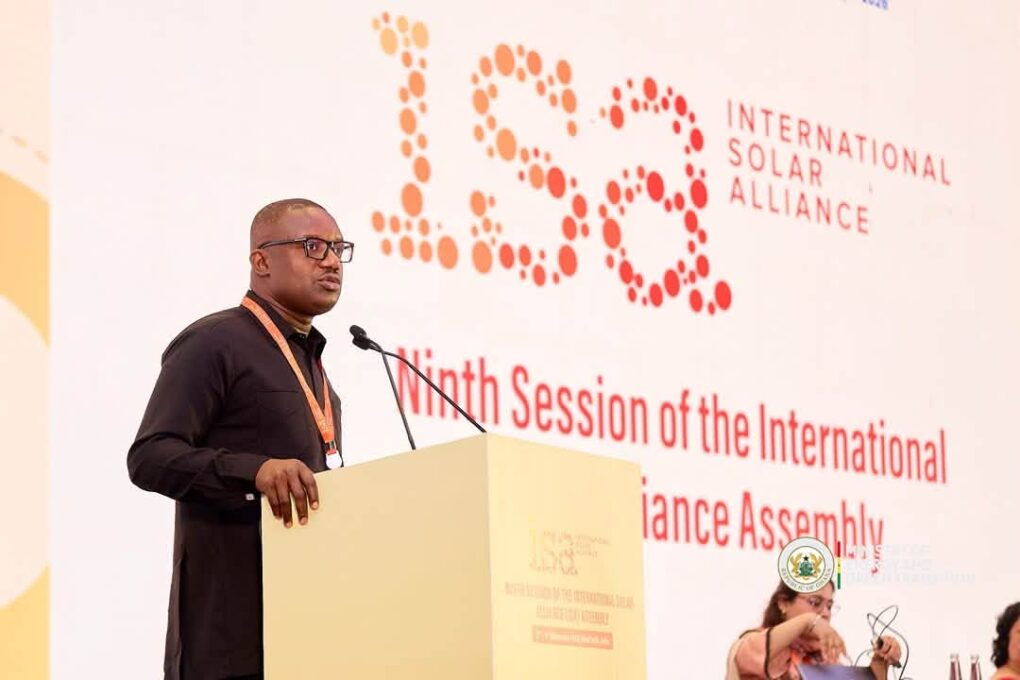
The Minister for Energy and Green Transition, Dr John Abdulai Jinapor, has called for increased investment in solar energy development across Africa, describing energy self-sufficiency as a strategic priority amid growing uncertainty in global energy markets.
Dr Jinapor made the remarks while delivering the opening address at a discussion on “Global Solar: Then, Now and Next” during the Ninth Session of the International Solar Alliance (ISA) Assembly.
He emphasised that recent disruptions in international energy markets have exposed the risks associated with excessive dependence on imported fuels, making renewable energy development increasingly important for national security and economic stability.
According to the Energy Minister, solar power presents Africa with a major opportunity to improve energy security, reduce dependence on external energy suppliers and build more resilient economies.
Ghana Intensifies Solar Energy Development
Dr Jinapor highlighted Ghana’s ongoing efforts to expand renewable energy infrastructure as part of the government’s broader energy transition agenda.
He explained that the country is promoting solar power through the installation of solar-powered streetlights, encouraging rooftop solar systems and introducing policies to transition critical public infrastructure to renewable energy.
These initiatives are expected to support Ghana’s renewable energy ambitions, improve electricity access and reduce reliance on conventional energy sources.
The Minister, however, stressed that Africa’s solar energy strategy should extend beyond installing solar panels and expanding electricity generation capacity.
Jinapor Pushes for Local Solar Manufacturing in Africa
The Energy Minister called for the development of a comprehensive solar energy value chain that would enable African countries to manufacture solar technologies and create greater economic value locally.
He argued that Africa should move beyond being a major consumer of imported solar equipment and position itself as a competitive producer within the global renewable energy industry.
Dr Jinapor identified technology transfer, local industrial capacity and access to affordable long-term financing as essential requirements for achieving this objective.
He noted that strengthening local manufacturing capabilities would help African economies maximise the economic benefits of their renewable energy resources while creating opportunities for industrial development.
Solar Energy Key to Job Creation and Economic Growth
Dr Jinapor maintained that Africa’s abundant sunshine represents a significant economic opportunity that must be strategically harnessed to accelerate industrialisation and sustainable development.
He explained that expanding solar energy investments could generate employment opportunities, strengthen economic resilience, improve energy independence and support long-term industrial growth.
The Minister’s remarks reinforce Ghana’s commitment to renewable energy development and the broader transition towards a sustainable, reliable and diversified energy sector.
He stressed that solar power should not only provide electricity but also serve as a foundation for industrialisation, job creation and greater energy sovereignty across Africa.
Source: newsthemegh.com