
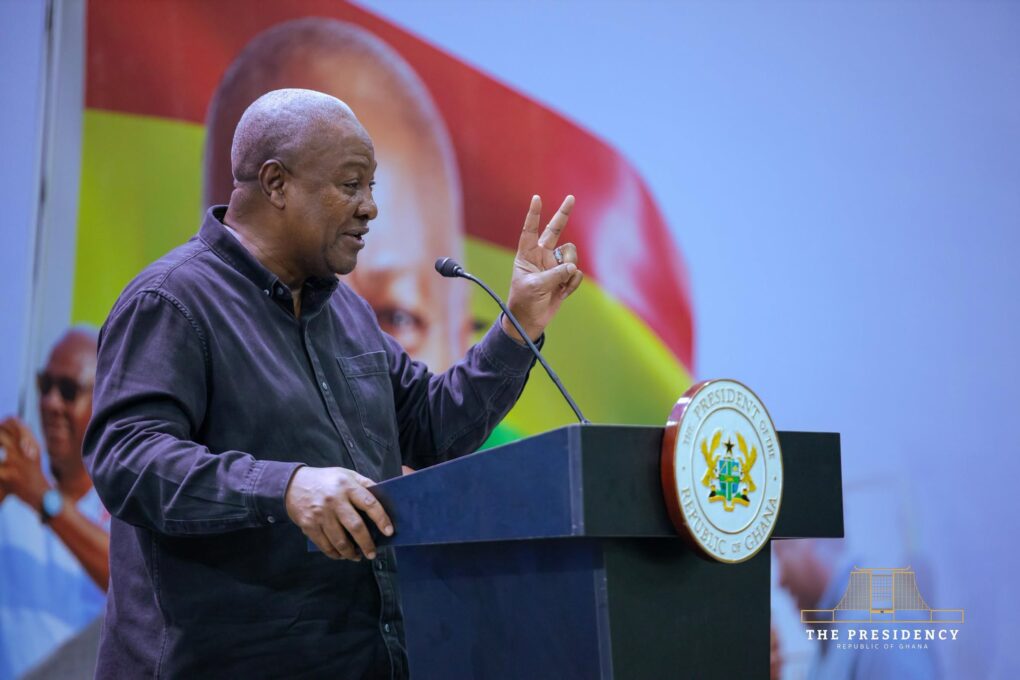
President John Dramani Mahama has announced a five-year strategic plan aimed at transforming Ghana’s pharmaceutical manufacturing industry and significantly reducing the country’s dependence on imported medicines.
The initiative seeks to increase local pharmaceutical production, improve access to affordable medicines and position Ghana as a major pharmaceutical manufacturing and export hub in West Africa.
President Mahama disclosed the plan during a Free Primary Healthcare (FPH) durbar at Zuarungu in the Bolgatanga East District as part of his Reset Agenda Tour of the Upper East Region.
Ghana Imports 70% of Medicines
According to President Mahama, Ghana currently imports approximately 70% of the medicines used in the country, despite possessing the capacity to manufacture many essential drugs locally.
He said the high dependence on pharmaceutical imports puts pressure on Ghana’s healthcare financing system and can contribute to challenges involving the availability and affordability of medicines.
The President explained that representatives from the National Vaccine Institute, Ministry of Health, Pharmaceutical Association of Ghana and other stakeholders recently presented a five-year roadmap designed to achieve greater self-sufficiency in medicine production.
The strategy is expected to strengthen local pharmaceutical companies, expand manufacturing capacity and reduce Ghana’s reliance on foreign pharmaceutical suppliers.
Government Targets Affordable Medicines
President Mahama said increasing domestic drug manufacturing would help reduce the cost of medicines while improving the government’s ability to provide essential healthcare services.
He explained that locally manufactured medicines could help shield Ghana from international supply disruptions and other external pressures affecting the pharmaceutical market.
The initiative is also expected to support the government’s expansion of preventive healthcare and Free Primary Healthcare services, particularly in underserved communities.
The President said the government would create the necessary conditions for pharmaceutical manufacturers to expand their businesses and produce medicines that meet the needs of the Ghanaian population.

Ghana Eyes Pharmaceutical Export Market
Beyond meeting local demand, the government wants Ghana’s pharmaceutical industry to become competitive enough to supply medicines to neighbouring countries.
President Mahama said the strategy could help Ghana transition from being a major pharmaceutical importer to a producer and exporter of medicines, while creating employment opportunities and generating foreign exchange.
He added that the government had already reached agreements with pharmaceutical companies to ensure the availability of medicines as efforts to expand local production continue.
The arrangements are expected to support patients requiring long-term treatment for conditions such as hypertension and diabetes.
Free Primary Healthcare Programme Expands
Health Minister Kwabena Mintah Akandoh disclosed that more than 24,000 pieces of medical equipment were being distributed nationwide under the Free Primary Healthcare programme.
The distribution includes about 9,000 health kits, with 1,320 allocated to the Upper East Region.
The Free Primary Healthcare programme has commenced in 150 of Ghana’s 261 districts, with underserved communities being prioritised. The government plans to extend the programme nationwide by the end of 2028.
NHIS Payments and Membership Increase
The Deputy Chief Executive Officer of the National Health Insurance Authority (NHIA) in charge of Finance and Investment, Anatu Anne Seidu Bogobiri, said the government had cleared GH¢963 million in outstanding claims owed to healthcare providers as of April 2026.
She disclosed that more than GH¢2 billion was paid to healthcare providers in 2025, including over GH¢150 million to providers in the Upper East Region.
Between January and July 2026, the NHIA paid approximately GH¢1.4 billion to healthcare providers nationwide, with more than GH¢100 million going to facilities in the Upper East Region.
NHIS active membership also increased from 54% in 2024 to 66% in 2025 and 76% by June 2026, reflecting improved participation in Ghana’s National Health Insurance Scheme.
The NHIA official said the government remained committed to ensuring that Ghanaians could access quality healthcare regardless of their location.
The NHIS has also released GH¢36 million to 107 district health facilities to support the Free Primary Healthcare programme. The Upper East Region received approximately GH¢4.2 million for 14 facilities.
Pharmaceutical Manufacturing to Drive Ghana’s Healthcare Reform
The five-year pharmaceutical development strategy forms part of the government’s broader efforts to strengthen Ghana’s healthcare system, improve medicine availability and make healthcare more affordable.
If successfully implemented, the plan could boost local pharmaceutical manufacturing, reduce medicine importation, create jobs, generate foreign exchange and improve access to essential medicines across Ghana.
Source: newsthemegh.com