
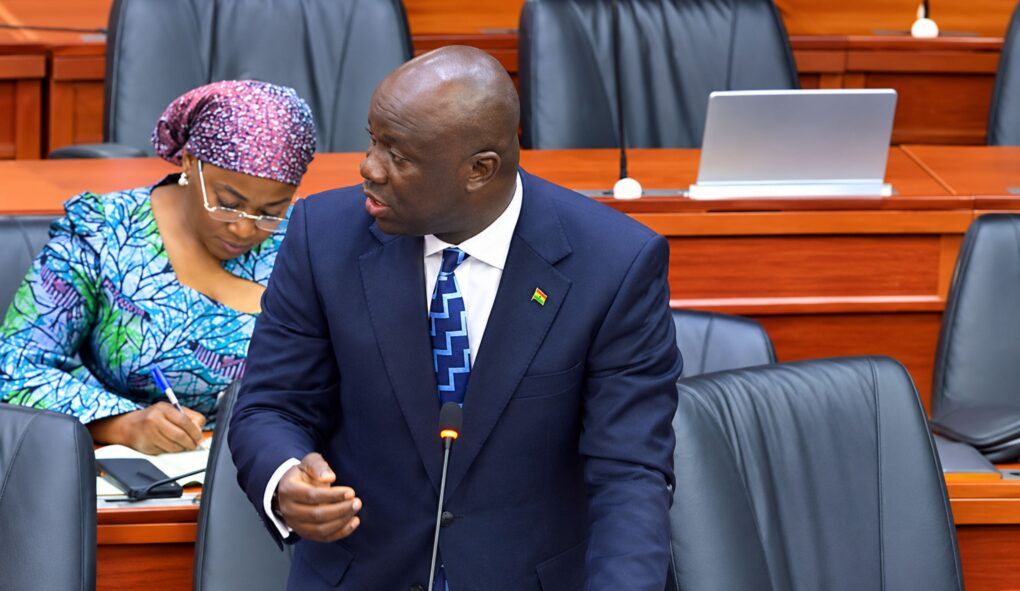
The Minority Caucus in Ghana’s Parliament on Tuesday staged a walkout in protest after Speaker Alban Sumana Kingsford Bagbin ordered the Member of Parliament for Damongo, Samuel Abu Jinapor, to leave the Chamber following a heated disagreement over allegations of the sale of Ghanaian diplomatic passports.
The confrontation occurred after Mr Jinapor, who serves as the Ranking Member on Parliament’s Foreign Affairs Committee, alleged that Ghanaian diplomatic passports were being sold for amounts ranging between GH¢50,000 and US$10,000 to US$50,000.
Speaker Bagbin directed the former Lands and Natural Resources Minister to withdraw the allegation, explaining that he would be allowed to raise the matter again if he could provide supporting evidence.
However, Mr Jinapor initially resisted the directive, prompting the Speaker to instruct the Parliamentary Marshal to escort him out of the Chamber.
“Marshal, please carry out the orders immediately. Honourable Abu Jinapor, please walk out of this place or you will be taken out,” Mr Bagbin ordered.
Following the directive, Mr Jinapor packed his parliamentary documents and left the Chamber, while Minority MPs also staged a walkout in solidarity with their colleague.
Abu Jinapor Raises Alarm Over Alleged Sale of Ghanaian Diplomatic Passports
The controversy started when the Damongo MP raised concerns about reports that Ghanaian diplomatic passports were allegedly being sold to individuals for between US$10,000 and US$50,000.
Mr Jinapor described the alleged practice as a serious national security and diplomatic concern that could damage Ghana’s international reputation.
He told Parliament that he had what he described as credible evidence to support the allegation and called for an investigation into the matter.
According to him, the alleged sale of diplomatic passports required urgent parliamentary attention because of the special privileges and international responsibilities associated with the documents.
He explained that diplomatic passports were subject to specific legal and administrative requirements, adding that the Foreign Affairs Minister was the legally authorised official responsible for granting them.
Mr Jinapor further cautioned that any abuse of the diplomatic passport issuance process could have far-reaching consequences for Ghana’s diplomatic relations and international standing.
Majority Leader James Agalga Challenges Abu Jinapor’s Allegation
The Ranking Member’s submission was interrupted by Majority Leader James Agalga, who objected to the allegation on the grounds that it suggested possible criminal conduct and therefore required sufficient evidence.
Mr Agalga argued that such a serious claim should not be admitted into parliamentary proceedings without proper substantiation.
He consequently appealed to the Speaker to direct Mr Jinapor to withdraw the statement and ensure that the relevant portion was removed from the official parliamentary records.
In response, the Damongo MP insisted that he had evidence to support his claims and maintained that the alleged sale of diplomatic passports was already a matter of public discussion.
Speaker Bagbin subsequently directed him to withdraw the allegation, while assuring him that he could return to the issue through the appropriate parliamentary procedures once the necessary evidence was available.
Although Mr Jinapor indicated his willingness to withdraw the statement and revisit the matter with supporting evidence, the Speaker considered his response insufficient and ordered the Parliamentary Marshal to remove him from the Chamber.
The decision triggered an immediate protest from Minority MPs, who walked out of Parliament in solidarity with their colleague.

Afenyo-Markin Criticises Speaker Bagbin’s Decision
Addressing journalists after the parliamentary walkout, Minority Leader Alexander Afenyo-Markin criticised the Speaker’s handling of the disagreement, arguing that the alleged sale of Ghanaian diplomatic passports was a matter of significant public interest.
Mr Afenyo-Markin maintained that Members of Parliament should be allowed to raise issues requiring investigation without necessarily having to establish every aspect of the allegations before bringing them to the attention of the House.
He argued that the Foreign Affairs Minister could have been invited to brief Parliament on the matter, after which a bipartisan parliamentary committee could be established if further investigations were considered necessary.
The Minority Leader described the Speaker’s action against Mr Jinapor as “harsh, high-handed and mostly unfair”, insisting that the issue deserved parliamentary scrutiny.
He also questioned the decision to order the Damongo MP out of the Chamber, particularly after he had indicated his willingness to withdraw the allegation and return to the matter with supporting evidence.
According to Mr Afenyo-Markin, the Minority leadership believed that Mr Jinapor had already indicated his intention to withdraw the statement, and that the official parliamentary records would reflect what transpired.
He further disclosed that Minority leaders had attempted to attract the Speaker’s attention to resolve the disagreement but were unsuccessful.
The caucus therefore decided to leave the Chamber in solidarity with Mr Jinapor, explaining that the move was intended to prevent further escalation of the confrontation.
Diplomatic Passport Allegations Spark Parliamentary Debate
The incident has brought renewed attention to the administration, issuance and regulation of Ghanaian diplomatic passports, as well as concerns about the country’s international reputation and diplomatic integrity.
Diplomatic passports are official travel documents issued to authorised individuals for specific government and diplomatic responsibilities. Their issuance and use are subject to established legal and administrative procedures.
The allegations raised by Mr Jinapor, however, remain claims requiring independent verification and investigation.
The parliamentary disagreement also highlights broader questions about parliamentary privileges, the enforcement of Standing Orders, accountability and the role of MPs in raising matters of public interest.
The controversy is expected to generate further debate over diplomatic passport administration, parliamentary oversight and the need for transparency in Ghana’s foreign affairs operations.
Source: newsthemegh.com