
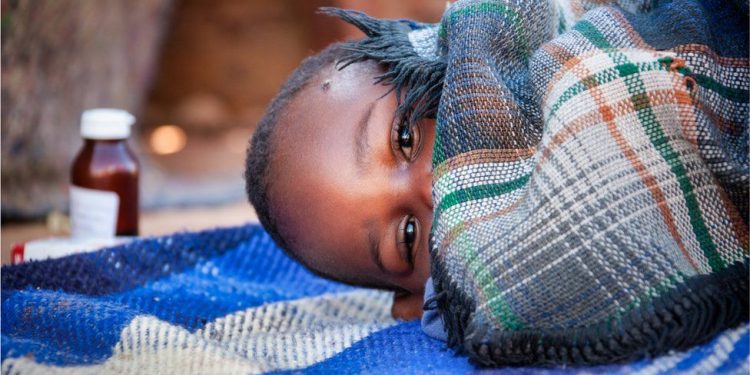
The first medicine for malaria that is safe for infants and young children has been authorized for use.
Within a few weeks, it is anticipated to be implemented in African nations.
There are currently no licensed medications for malaria that are specifically intended for infants.
Instead, versions designed for older children have been used to treat them, which increases the danger of overdosing.
The most recent statistics available for 2023 show that malaria was responsible for almost 597,000 deaths.
Nearly three-quarters of the fatalities were children under five, and nearly all of them occurred in Africa.
There are medicines for malaria in children, but none have been developed with the smallest infants and young children in mind—those weighing less than 4.5 kg, or about 10 lb.
Rather, they have been treated with medications meant for older kids.
However, that comes with hazards because babies’ bodies digest medications differently and their livers are still developing, so dosages for these older kids might not be healthy for them.
There is a “treatment gap” as a result, according to experts.
Within weeks, a new medication created by Novartis, a pharmaceutical corporation, is expected to be introduced in the nations and areas with the highest malaria rates after receiving approval from Swiss authorities.
Novartis intends to launch it primarily for nonprofit purposes.
According to Vas Narasimhan, the company’s CEO, this is a significant time.
“For more than three decades, we have stayed the course in the fight against malaria, working relentlessly to deliver scientific breakthroughs where they are needed most.
“Together with our partners, we are proud to have gone further to develop the first clinically proven malaria treatment for newborns and young babies, ensuring even the smallest and most vulnerable can finally receive the care they deserve.”
Novartis and the Medicines for Malaria Venture (MMV), a Swiss non-profit organization that was initially supported by the Dutch, British, and Swiss governments as well as the World Bank and the Rockefeller Foundation, collaborated to develop the medication, which is referred to as Coartem Baby or Riamet Baby in some countries.
Eight African countries participated in the drug’s evaluation and testing as well, and they should be among the first to have access to it.
According to MMV CEO Martin Fitchet, this is yet another significant step in reducing the enormous toll that malaria has taken.
“Malaria is one of the world’s deadliest diseases, particularly among children. But with the right resources and focus, it can be eliminated.
“The approval of Coartem Baby provides a necessary medicine with an optimised dose to treat an otherwise neglected group of patients and offers a valuable addition to the antimalarial toolbox.”
This should be viewed as a significant advancement in the preservation of infants’ and young children’s lives, according to Dr. Marvelle Brown, an associate professor at the University of Hertfordshire’s School of Health, Medicine, and Life Sciences.
“The death rate for malarial infections, particularly in sub-Saharan Africa, is extremely high – over 76% of deaths occur in children under five years old.
“Increase in death from malaria is further compounded in babies born with sickle cell disease, primarily due to a weak immune system.
“From a public health perspective, Novartis making this not-for-profit can help with reducing inequality in access to healthcare.”
Source: newsthemegh.com