
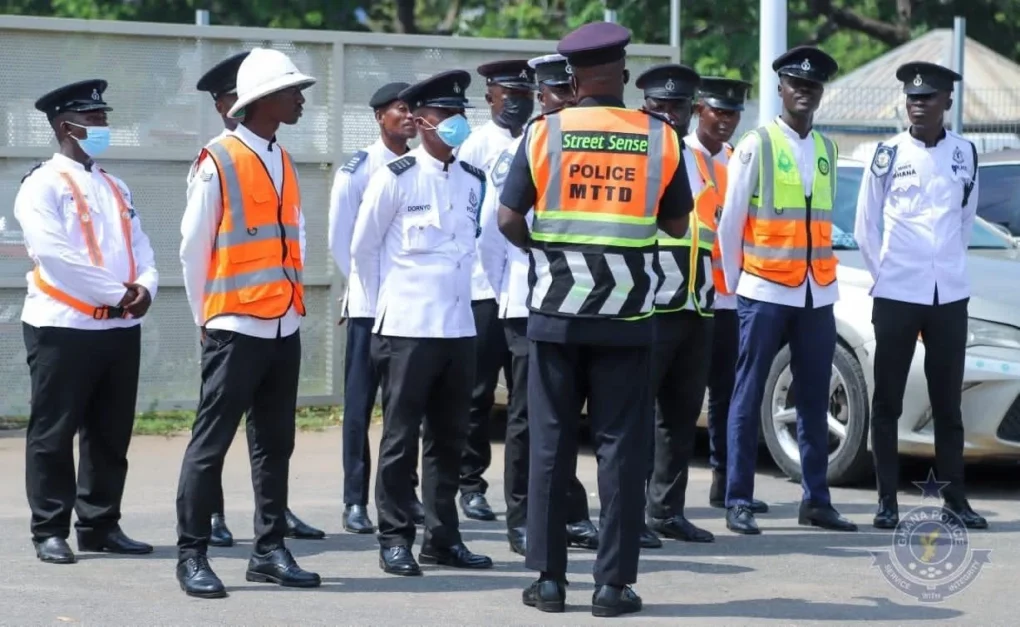
Ghana has introduced the Road Traffic Regulations, 2026 (L.I. 2519), setting out fines and, for certain violations, imprisonment for motorists and other road users who breach road safety laws.
The new regulations cover a wide range of road traffic offences in Ghana, including illegal racing, jumping red lights, improper parking, refusing to obey traffic officers and using television monitors while driving.
The regulations also establish new rules for automated traffic enforcement, allowing offences captured by approved traffic monitoring and enforcement devices to attract graduated penalties.
Under the automated enforcement system, motorists who repeatedly violate road traffic regulations could face additional sanctions, including the suspension or revocation of their driving licences.
A 14-page schedule of road traffic offences and penalties, prepared by D/Sgt Nana Kwadwo Otibu-Gyan of the Legal and Prosecution Unit, RHQ/Ho, provides details of the violations and sanctions contained in the new regulations.
25 Road Traffic Offences Motorists Should Know
The following are 25 key road traffic offences and penalties under Ghana’s Road Traffic Regulations, 2026 (L.I. 2519) that drivers, motorcyclists and other road users should be aware of.
The regulations form part of Ghana’s broader efforts to improve road safety, traffic management and compliance with road traffic laws.
Motorists are encouraged to familiarise themselves with the new requirements to avoid traffic fines, penalties, licence suspension and possible imprisonment for serious or repeated violations.
The revised Road Traffic Regulations include 25 major violations that drivers should be aware of:
Driving and traffic offences
- Using a mobile phone while driving — Regulation 132
A driver who holds, uses or operates a cellular or mobile telephone or another communication device while driving commits an offence.
The penalty is a fine of up to 50 penalty units, imprisonment for up to three months, or both.
The same penalty applies to a person supervising a learner driver who uses a hand-held mobile phone or device while driving.
- Driving under the influence of alcohol or drugs — Regulation 131
Driving or attempting to drive a motor vehicle on a road while under the influence of alcohol or drugs attracts one of the heavier penalties under the Regulations.
An offender faces a fine of 50 to 200 penalty units, imprisonment for up to 40 months, or both.
- Jumping a red light — Regulation 222(7)-(8)
A driver who jumps a red light at a signalised intersection faces a fine of 10 to 30 penalty units, imprisonment for up to 30 days, or both.
- Failing to stop or yield — Regulation 222
The Regulations also penalise drivers who fail to obey STOP and YIELD signs.
This includes failing to stop or give way at an intersection, failing to stop at the required point before a pedestrian crossing or stop line, and approaching a YIELD sign without slowing down and giving way.
The penalty is 10 to 30 penalty units, imprisonment for up to 30 days, or both.
- Street racing, drag racing and speed competitions — Regulation 221
Driving, causing another person to drive, or permitting a vehicle to be used in a race, speed competition, drag race, endurance test or speed-record attempt on a road is an offence.
Participating in such a competition in an area not designed or authorised for it is also prohibited.
Both offences attract 10 to 25 penalty units, imprisonment for up to 30 days, or both.
- Speeding or failing to slow down in dangerous conditions — Regulations 212 and 213
Exceeding the maximum speed prescribed for a particular class of vehicle attracts a fine of 10 to 25 penalty units, imprisonment for up to 30 days, or both.
But the Regulations go further. A driver can also be punished for failing to reduce speed below the posted limit when hazardous conditions require it, or for failing to drive at an appropriate speed at intersections, curves, hillcrests, narrow roads, bridges and other dangerous locations.
Those offences attract 50 to 100 penalty units, imprisonment for three to six months, or both.
- Breaking railway crossing rules — Regulation 223
A driver who fails to stop within the prescribed distance of a railway line at a crossing, or proceeds before it is safe, faces 5 to 25 penalty units, imprisonment for up to 30 days, or both.
Walking, riding or driving through, around or under a closed or moving railway gate or barrier attracts the same penalty.
- Overtaking at a pedestrian crossing — Regulation 224
A driver must not overtake a vehicle that has stopped at a pedestrian crossing to allow someone to cross.
Doing so attracts 10 to 25 penalty units, imprisonment for up to 30 days, or both.
Failing to slow down when approaching a marked or signed pedestrian crossing also attracts the same penalty.
- Disobeying traffic control officers or devices — Regulation 226
Disobeying a traffic control officer or traffic control device attracts a fine of 10 to 25 penalty units, imprisonment for up to 30 days, or both.
- Failing to wear a seat belt — Regulation 144
Failing to fit or use a seat belt as required attracts a fine of 10 to 50 penalty units, imprisonment for up to eight months, or both.
Selling, offering for sale or installing a seat belt that does not comply with the required standards is also an offence.
Motorcycles, tricycles and vehicle safety
- Riding without a helmet or reflective clothing — Regulation 109
A person riding or travelling as a pillion passenger on a motorcycle, tricycle or quadricycle must wear the required reflective clothing and a compliant protective helmet.
A rider must also ensure that a pillion passenger under 18 complies with the requirement.
Failure attracts 25 to 50 penalty units, imprisonment for one to three months, or both.
- Driving without warning triangles or other approved warning devices — Regulation 108
A vehicle must carry a pair of advance warning triangles, reflective cones, a blinking-light device or an electronic warning beacon.
Failure to have the required warning devices attracts 25 to 50 penalty units, imprisonment for 30 days to three months, or both.
- Driving with a tinted front windscreen — Regulation 92
Driving a motor vehicle with a tinted front windscreen is an offence.
The Regulations also prohibit tinted glass that fails to meet the required light-transmittance or other prescribed standards.
The penalty is 25 to 50 penalty units, imprisonment for one to three months, or both.
- Using unsafe or worn-out tyres — Regulation 87
The Regulations prohibit fitting a tyre that is more than six years old or is of the wrong temperature class.
Tyres that are under-inflated, over-inflated, bulging, showing exposed cords or worn beyond the legal tread limit are also prohibited.
The offence attracts 25 to 50 penalty units, imprisonment for 30 days to three months, or both.
- Driving without a fire extinguisher and first-aid kit — Regulation 94
A vehicle or trailer that does not carry the required fire extinguisher and first-aid kit attracts a fine of 10 to 25 penalty units, imprisonment for up to 30 days, or both.
- Overloading a vehicle — Regulation 118
Driving an overloaded motor vehicle attracts a fine of 25 to 50 penalty units, imprisonment for up to three months, or both.
The schedule says prescribed overload fees may also apply.
Commercial transport offences
- Operating commercial motorcycles or tricycles without the required authorisation
The Regulations create a licensing framework for commercial motorcycles, tricycles and quadricycles.
Operating a commercial motorcycle, tricycle or quadricycle transport organisation without the required licence, or operating without the required district permit, can attract 50 to 100 penalty units, imprisonment for eight to 24 months, or both.
A commercial tricycle or quadricycle rider who operates without a valid licence also faces 25 to 50 penalty units, imprisonment for up to eight months, or both.
- Overcharging passengers — Regulation 180
A driver of a passenger-carrying vehicle who demands or charges above the fare predetermined by transport operators and the relevant ministry commits an offence.
The penalty is 10 to 25 penalty units, imprisonment for up to 30 days, or both.
- Stopping or parking buses and taxis outside designated areas — Regulation 231
A bus or taxi driver who stops or parks outside an authorised stop or stand faces 10 to 25 penalty units, imprisonment for up to 30 days, or both.
- Boarding or alighting at unauthorised places — Regulation 204
Passengers are also subject to the Regulations.
Boarding or alighting from a vehicle at an unauthorised place attracts a fine of up to five penalty units, imprisonment for up to seven days, or both.
The same applies to entering or leaving a vehicle while it is moving, and to a driver who permits a passenger to do so.
Pedestrians, parking and roadside conduct
- Jaywalking and failing to use a footbridge — Regulation 203
Pedestrians can be prosecuted for several road traffic offences.
These include jaywalking or ignoring a traffic light signal, failing to use a footbridge or underpass where one is provided, walking on the roadway when a footpath exists and crossing a road at an unauthorised location.
The offences attract a fine of up to five penalty units, imprisonment for up to seven days, or both.
- Improper parking — Regulations 228 and 235
The Regulations contain several parking offences.
These include parking contrary to a traffic sign, parking too close to a junction, parking in front of a building entrance or exit, parking in a loading area or permit-holder bay, stopping on a hard shoulder or central reserve, double parking and parking in an area designated for another class of vehicle.
Most of these offences attract 10 to 25 penalty units, imprisonment for up to 30 days, or both.
Parking in a space reserved for a person with disability without entitlement attracts a fine of up to 25 penalty units, imprisonment for up to eight months, or both.
- Preaching or hawking in a moving public or commercial vehicle — Regulation 141
Causing or permitting a nuisance, including preaching or hawking in a public or commercial vehicle while it is in motion, is prohibited.
Because Regulation 141 does not prescribe a separate punishment, the general penalty applies: 10 to 50 penalty units, imprisonment for up to eight months, or both.
- Selling goods on roads and pedestrian walkways — Regulation 142
Selling, displaying, offering for sale or delivering goods on or alongside a road, on a pedestrian walkway, near a railway crossing, under a blind-corner sign or within an intersection is an offence.
It attracts a fine of up to 50 penalty units, imprisonment for up to three months, or both.
- Washing or repairing a vehicle on the road — Regulation 139
Washing or repairing a motor vehicle or trailer on a road attracts a fine of up to 25 penalty units, imprisonment for up to 30 days, or both.
The Regulations also provide for automated enforcement.
Under Regulation 242, offences listed in the Ninth Schedule and detected by Traffic Enforcement Devices are subject to graduated automated fines.
The schedule provides for 10 penalty units for the first, second and third offences, 15 penalty units for a fourth offence, and 20 penalty units for a fifth offence.
A sixth offence within 24 months can result in court proceedings and may lead to licence revocation or suspension for at least 12 months, together with retraining and retesting.
Regulation 243 provides a general penalty where the Regulations create an offence but do not prescribe a specific punishment.
Such an offence attracts 10 to 50 penalty units, imprisonment for up to eight months, or both.
Regulation 244 also allows a court to order retraining where an offence involves carelessness, recklessness or wilful disregard of the Regulations, in addition to any other penalty imposed.
Source: newsthemegh.com