

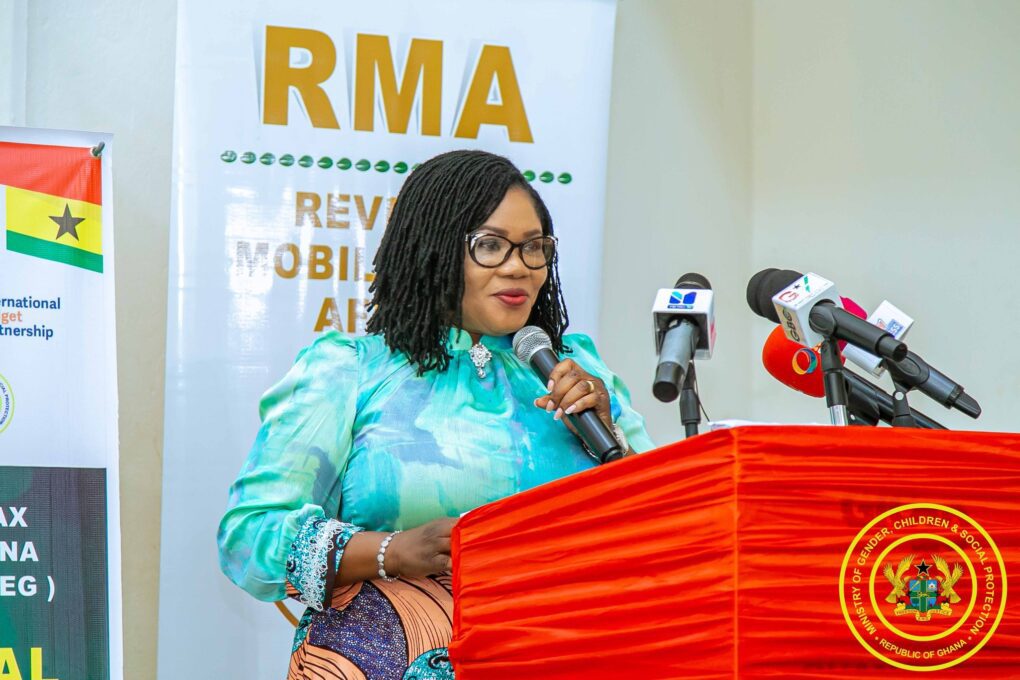
The government’s dedication to creating tax laws that enhance social protection and protect the most vulnerable members of society has been reaffirmed by Hon. Dr. Agnes Naa Momo Lartey, Minister for Gender, Children, and Social Protection.
She made the call during the National Tax Forum 2025 in Accra, which had as its theme “Tax Policies for Social Protection” and was hosted by Revenue Mobilization Africa (RMA) in collaboration with the Ghana Integrity Initiative (GII), Trade Union Congress (TUC), and Ghana Revenue Authority (GRA).
Redistributing wealth, lowering poverty, and financing initiatives like the National Health Insurance Scheme (NHIS), the School Feeding Program, Free Senior High School, and the Livelihood Empowerment Against Poverty (LEAP) all depend on fair tax systems, the Minister emphasized.

She warned that although these initiatives have increased human capital and decreased poverty, the achievements are in jeopardy due to competing demands and financial strains.
She expressed worry that indirect taxes, like fuel charges and VAT, account for more than 60% of domestic revenue and disproportionately affect low-income households.
She listed five priorities to address this: formalizing the informal sector to increase the tax base, increasing progressivity so that those with more money contribute more, reducing tax evasion, avoidance, and illicit financial flows, allocating taxes for social programs, and boosting public trust through accountability and transparency.
The Minister also emphasized the need to implement socially responsible responses to growing living expenses, acknowledge unpaid care labor in tax policy, and safeguard women and vulnerable groups in the informal economy.

She praised RMA and its partners for offering a forum for discussing tax fairness and urged cooperation from the media, academics, development partners, and civil society in promoting tax changes.
“The ultimate goal of tax reform is not only to raise revenue but also to raise living standards. Every cedi mobilized fairly expands the fiscal space to protect children, empower women, support the elderly, and invest in future generations. Tax justice is social justice, and a fairer tax system is the surest pathway to a better Ghana,” she said.
Source: newsthemegh.com