
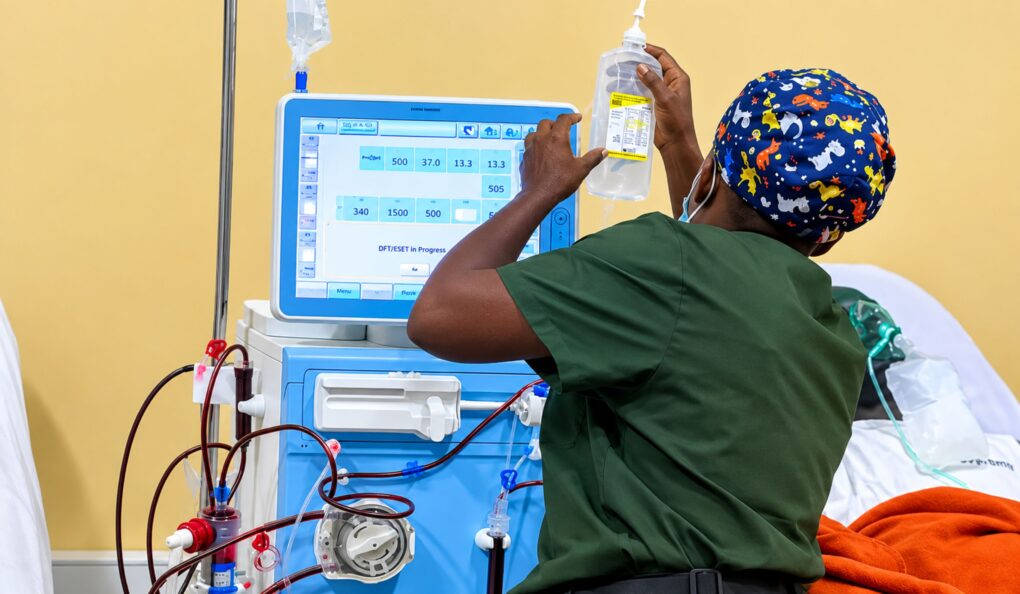
Patients receiving kidney dialysis treatment at the Effia Nkwanta Regional Hospital in Takoradi are appealing for urgent government intervention following the breakdown of two dialysis machines, leaving only one machine operational to serve a growing number of patients.
The equipment failure has triggered a serious healthcare crisis at the facility, with several patients travelling from different communities across the Western Region reportedly stranded at the hospital for days while waiting for their scheduled dialysis sessions.
The situation has also forced healthcare workers to reduce the duration of dialysis treatment from the usual three to four hours to approximately two hours to accommodate the increasing number of patients relying on the only functioning machine.
Patients affected by the situation have travelled from communities including Aboadze, Tarkwa, Bogoso, Prestea, Asankragwa and Half Assini.
Many have expressed concern that returning home without receiving their scheduled kidney treatment could further endanger their health, particularly as some are experiencing worsening fluid retention, body swelling and other complications associated with delayed dialysis.
Patients Stranded at Effia Nkwanta Hospital Over Dialysis Machine Shortage
Cynthia, who travelled from Half Assini with her husband, said they had been sleeping on the hospital premises for several days because of the shortage of functional dialysis machines.
According to her, her husband requires regular dialysis treatment, but the limited equipment available has made it difficult for patients to receive care according to their scheduled appointments.
She explained that the large number of people waiting for treatment has overwhelmed the hospital’s only operational dialysis machine, forcing patients to remain at the facility until their turn arrives.
Another patient, Joseph, who travelled from Aboadze, said he arrived at the hospital as early as 6:00 a.m. but was still waiting to receive treatment.
He expressed concern that patients’ health conditions were deteriorating due to prolonged delays, particularly because of increasing fluid accumulation in their bodies.
Joseph appealed to government and other stakeholders to provide additional dialysis equipment to prevent further suffering among patients with kidney disease.
He also called for urgent assistance, warning that the limited number of machines was making it increasingly difficult for patients to receive adequate treatment.
Dialysis Sessions Reduced to Two Hours
Egyir, another patient who had just completed his dialysis session after spending several days at the hospital, also called for immediate intervention.
He disclosed that patients who would normally spend between three and four hours undergoing dialysis were now receiving only two hours of treatment because of the pressure on the available machine.
He appealed to individuals, organisations and philanthropists with the capacity to help to support the hospital with additional dialysis machines.
The patients believe that increasing the number of operational machines would significantly reduce waiting times and improve access to essential kidney treatment.
Teacher Misses Three Weeks of Dialysis Treatment
The equipment shortage has also affected Leticia, a teacher who disclosed that she had missed three consecutive weeks of her scheduled dialysis sessions.
She said her deteriorating health condition had prevented her from reporting to work, while repeated instructions to wait for an available machine had worsened her situation.
According to her, she has continued experiencing increasing body swelling and fluid accumulation due to the prolonged interruption of her treatment.
Leticia described the situation as distressing and appealed to the relevant authorities to address the problem before more patients suffer serious health complications.
Call for Government Support and Additional Dialysis Machines
The affected patients are urgently appealing to the government, Ministry of Health, Ghana Health Service, corporate organisations, philanthropists and other development partners to intervene.
They are calling for the immediate provision of additional dialysis machines to the Effia Nkwanta Regional Hospital to improve kidney disease treatment and prevent further delays.
The situation has raised concerns about access to affordable and reliable healthcare services in the Western Region, particularly for patients who depend on regular dialysis to manage kidney failure.
With only one machine reportedly operational, patients fear that continued delays could expose them to life-threatening complications.
They are therefore urging stakeholders to treat the situation as an emergency and provide the necessary medical equipment to restore adequate dialysis services at the hospital.
Source: newsthemegh.com