
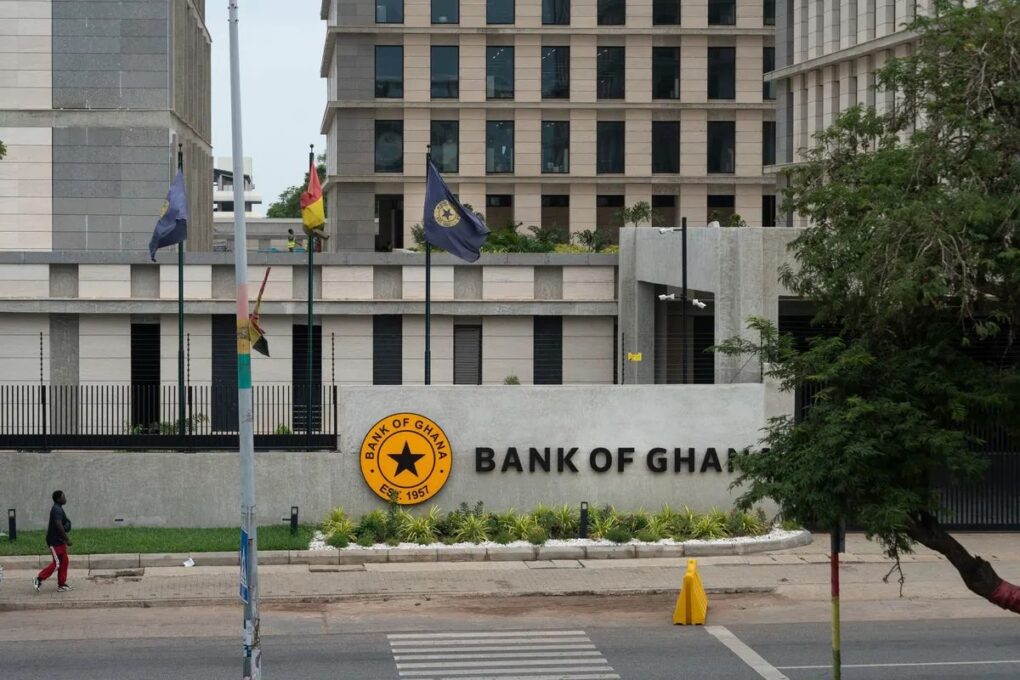
All 23 banks operating in Ghana have met the Bank of Ghana’s (BoG) regulatory capital requirements, marking a significant milestone in the recovery of the country’s banking sector following the Domestic Debt Exchange Programme (DDEP).
The Governor of the Bank of Ghana, Dr Johnson Pandit Asiama, announced the development at the 43rd Annual General Meeting of the Ghana Association of Banks and the launch of the sixth edition of the GH Bankers’ Voice Magazine in Accra on Thursday, October 8, 2026.
According to Dr Asiama, audited financial statements for 2022 revealed that 13 banks had fallen below the required regulatory capital thresholds due to the economic crisis and impairments on financial assets.
He attributed the successful recovery to the collective efforts of banks, shareholders, investors, the Ghana Association of Banks, the government and the Bank of Ghana.
The governor, however, stressed that meeting the minimum capital requirements was only the first step towards building a stronger and more resilient financial sector.
He explained that banks must now ensure their capital levels adequately reflect their risk exposure while maintaining sufficient financial buffers to withstand potential economic shocks. He also urged bank boards and senior management to improve their understanding of risks associated with their institutions’ business models.
Ghana’s Banking Sector Records Strong Asset Growth
Dr Asiama said Ghana’s banking industry had recorded considerable improvements since 2025, supported by better macroeconomic conditions and ongoing regulatory and supervisory reforms.
As of the end of August 2026, total banking sector assets had increased by 20.47 per cent to GH¢500.20 billion, up from GH¢415.20 billion recorded in August 2025.
The sector’s Capital Adequacy Ratio (CAR), which measures banks’ ability to absorb financial losses, also improved from 18.28 per cent to 19.10 per cent. This remains significantly above the regulatory minimum of 13 per cent.
Asset quality also showed signs of improvement, with the Non-Performing Loans (NPL) ratio declining from 20.77 per cent in August 2025 to 15.66 per cent in August 2026.
Despite the progress, the BoG governor cautioned that improved financial indicators should not be mistaken for the completion of banking sector reforms.
He said the priority must be to translate stronger balance sheets into sustainable business operations, improved risk management and increased financing for productive economic activities.
BoG Sets December 2026 Deadline for Banks to Reduce Bad Loans
The Bank of Ghana has reminded commercial banks to reduce their Non-Performing Loans ratios to the prudential limit of 10 per cent by the end of December 2026.
Dr Asiama identified poor asset quality as one of the major vulnerabilities facing Ghana’s banking industry.
He noted that the central bank issued its Notice on Non-Performing Loans in August 2025 to strengthen credit risk governance, establish prudential limits for bad loans and introduce remedial measures targeting wilful loan defaulters.
Banks have also been encouraged to improve credit assessment procedures, loan administration, monitoring systems, debt restructuring, collateral management, loan write-offs and recovery processes.
The governor explained that regulatory supervision was increasingly shifting from simply requiring banks to make provisions for bad loans towards ensuring that financial institutions actively prevent, manage and recover problem loans.
The Bank of Ghana is also preparing a Directive on Credit Risk Management to complement the existing Non-Performing Loans Notice.
New Liquidity Rules and Stress Tests for Banks
Dr Asiama disclosed that the central bank was preparing to publish a Liquidity Coverage Ratio Directive to establish prudential liquidity requirements for banks.
The directive is expected to strengthen liquidity risk management and ensure that banks maintain adequate resources to meet their financial obligations.
He emphasised that liquidity management should go beyond compliance with regulatory ratios. Banks must also maintain effective contingency funding plans, diversify their funding sources and improve asset-liability management.
The BoG has further strengthened its macroprudential stress-testing framework to assess how banks would perform under severe but plausible economic and financial conditions.
According to the governor, these tests help identify weaknesses within financial institutions and evaluate the banking system’s ability to withstand unexpected shocks.
Banks are expected to use the results to improve capital planning, liquidity management, risk appetite and strategic decision-making.
Cybersecurity and Digital Banking Risks Under BoG Scrutiny
The Bank of Ghana is increasing its supervisory attention on cybersecurity, digital fraud, data protection, cloud computing, third-party service providers and operational resilience.
Following the publication of the revised Cyber and Information Security Directive, the central bank has continued engaging the banking industry to support implementation.
Dr Asiama said the BoG would conduct thematic reviews to assess compliance with the directive.
He urged bank boards and senior management to treat cybersecurity and operational resilience as major business risks rather than issues that concern only information technology departments.
The growing use of digital banking services has made strong cybersecurity systems and effective fraud prevention measures increasingly important to protecting customer deposits and maintaining public confidence in Ghana’s financial system.
BoG Develops Artificial Intelligence Rules for Financial Institutions
The central bank is also developing a Directive on the Use of Artificial Intelligence in the Financial Sector to encourage responsible innovation while ensuring appropriate governance.
Dr Asiama said artificial intelligence could improve credit assessment, fraud detection, customer service, risk management and operational efficiency across the banking industry.
However, he warned that AI adoption also introduces risks involving data quality, model reliability, cybersecurity and consumer protection.
The proposed directive is expected to establish a framework for responsible AI experimentation and innovation while ensuring that financial institutions manage emerging risks throughout the technology’s lifecycle.
Building a More Resilient Banking Sector in Ghana
Dr Asiama said the key challenge facing Ghana’s banking industry was no longer simply whether it had recovered from the crisis associated with the Domestic Debt Exchange Programme, but whether sufficient measures were being taken to preserve those gains.
He emphasised that regulation alone could not guarantee a resilient banking system. Banks themselves must establish strong risk management cultures, develop sustainable business models and maintain the capacity to support customers during periods of economic growth and financial stress.
The governor said Ghana needed a banking sector capable of absorbing economic shocks, adapting to technological changes and providing sustainable financing for businesses and long-term national development.
The successful recapitalisation of all 23 banks represents an important step in restoring confidence in Ghana’s financial system. However, continued improvements in loan recovery, liquidity management, cybersecurity and responsible financial innovation will remain essential to sustaining the sector’s progress.
Source: newsthemegh.com