

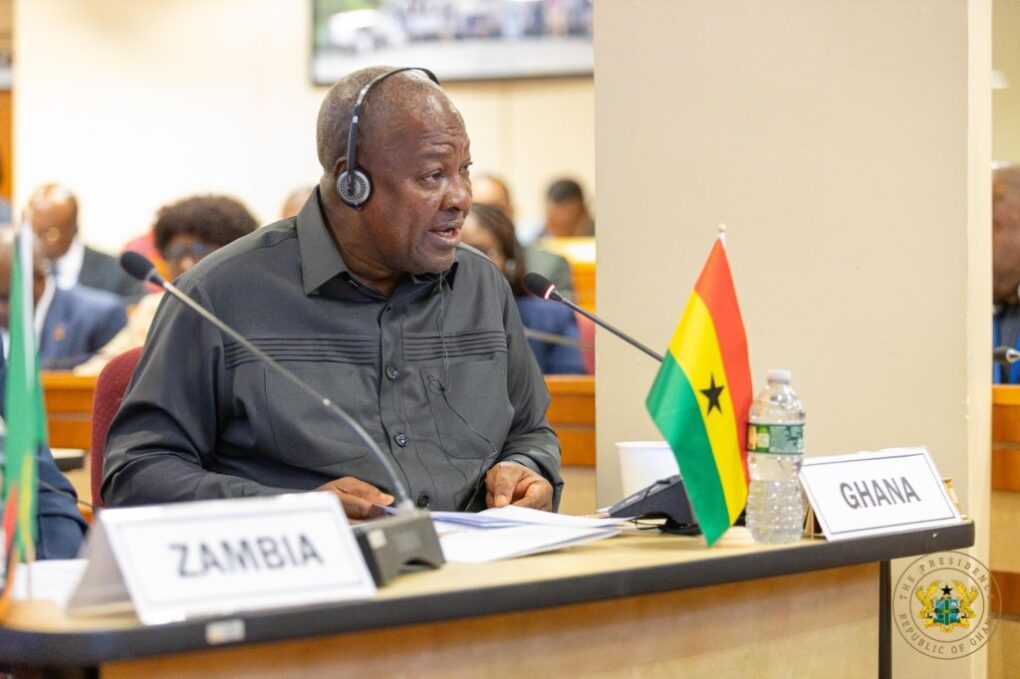
On the fringes of UNGA 80 on Monday, African heads of state commended President John Dramani Mahama for his recent Africa Health Sovereignty Summit in Accra, recognizing it as a significant initiative that has revitalized conversations on resilience and health self-sufficiency throughout the continent.
At a meeting of the Africa Centers for Disease Control and Prevention’s (Africa CDC) Committee of Heads of State and Government, President Mahama’s leadership was praised.
The leaders convened to deliberate on pressing matters, such as significant cuts in assistance from foreign partners.
According to reports, the United States alone has reduced its health financing to Africa by an estimated £8 billion, and other European countries have also made comparable reductions.
They agreed that these cuts show how vulnerable Africa’s health systems are, but they also present a pressing chance for the continent to halt the cycle of dependency by putting local investment first, encouraging transparency, and taking charge of its health agenda.
With the ambitious goal of supplying at least 60% of Africa’s pharmaceutical needs by 2040, the summit agreed to combining resources to create regional drug production centers.
Motivated by India’s thriving pharmaceutical industry, which has more than 10,000 manufacturing firms, the leaders conveyed their belief that a concerted African endeavor might not only drastically reduce medicine costs but also create a significant number of job opportunities throughout the continent.
The leaders decided to harmonize regulatory frameworks and work together with organizations like the World Bank and GAVI, which have promised to contribute their vast knowledge in supply chain management and the creation of health infrastructure, in order to realize this ambition.
The Africa CDC described its strategic initiatives, which include the deployment of cutting-edge surveillance equipment, the creation of operational centers, and extensive training programs, to improve the health resilience of the continent.
In order to provide real-time connectivity for early detection and prompt preventative action against the spread of pandemics like Mpox, Dengue Fever, Ebola, Cholera, and other communicable diseases, these systems integrate digital tools, even reaching rural areas.
Ghana’s proactive measures were also emphasized by President Mahama, whose “Accra Reset” played a significant role in laying the groundwork for these fresh talks.
He discussed the nation’s preparedness to greatly boost spending in its health sector beginning next year through the “Big Push” project, as well as the government’s measures, which have uncapped the National Health Insurance Scheme (NHIS) and increased access to healthcare.
President Mahama, who took over the meeting’s chair from the president of Angola and the chair of the African Union, requested greater dedication from all participating nations and more direct interactions with possible funders and investors through persistent lobbying.
With crucial backing from GAVI and the WHO Director General, who agreed to review progress at a future meeting scheduled on the fringes of the UN General Assembly, a resolution was formally adopted, creating a strong policy framework to propel this ambitious agenda.


Source: newsthemegh.com