
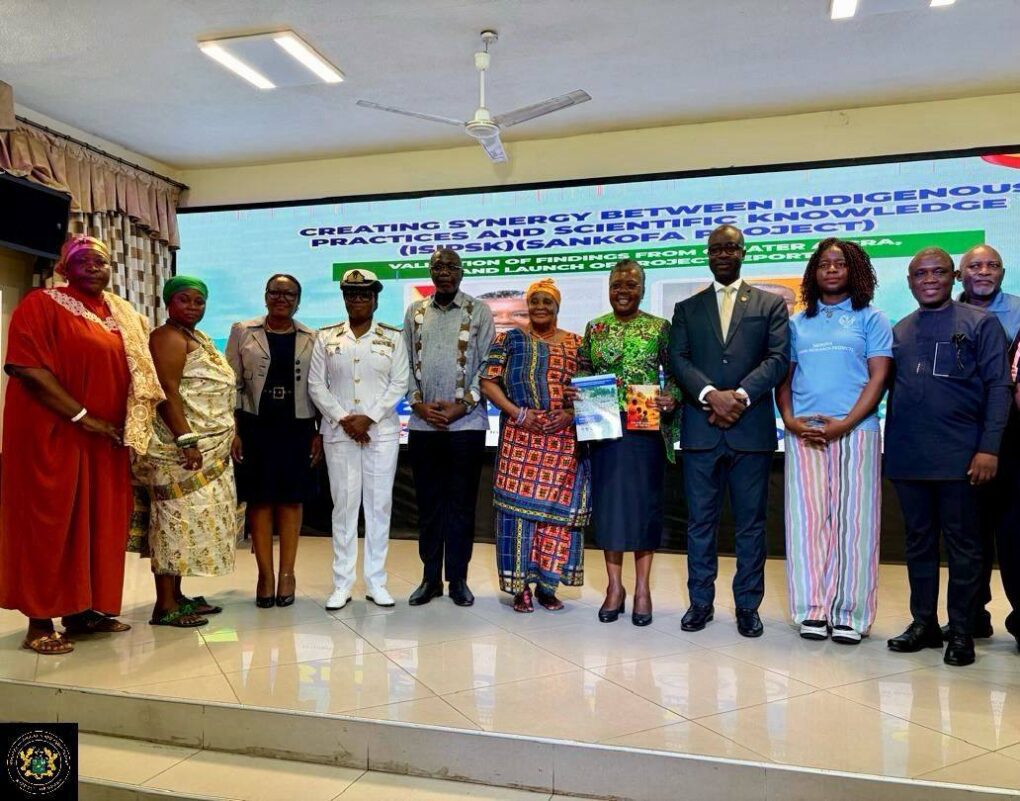
A SANKOFA Project research study has recommended for greater collaboration between indigenous fishing techniques and modern scientific methodologies to protect Ghana’s marine resources, using the fishing closed season as an example.
The study, titled “Creating Synergies Between Indigenous Practices and Scientific Knowledge,” was delivered on Tuesday, February 3, 2026, at the Clossag Auditorium.
It found important reasons contributing to dwindling fish stocks, including as illicit fishing methods, an increase in fishing canoes, industrial trawling of immature fish, and the progressive abandonment of traditional conservation efforts like “wichi.”

Key Recommendations • Harmonise indigenous conservation practices with scientific fisheries management
• Strengthen enforcement against illegal fishing activities
• Review the timing of the closed season to May or June to align with the natural breeding cycle of fish
• Develop innovative and inclusive approaches to communicating fisheries policies
• Sustain traditional conservation practices, including the Tuesday fishing holiday
Community Perspectives: The study also emphasised how the closed season affects fishing communities financially, especially women who work as canoeists, fish processors, and traders.
Fishermen voiced great support for the limited season in principle despite these obstacles, particularly if it is more in line with ecological and cultural reality.
During the occasion, Hon. Fisheries and aquaculture Minister Emelia Arthur reiterated the government’s dedication to evidence-based and participatory fisheries management.
She stressed the need for continued cooperation with district assemblies and fishing communities in order to incorporate customs into contemporary governing structures.
The Minister stated, “Let us view the SANKOFA Project as a foundation to inform policy, protect livelihoods, and strengthen community resilience as we close it.”
Future fisheries regulations, increased community involvement, sustainable livelihoods, and the preservation of Ghana’s marine ecosystem are all anticipated benefits of the research.

Source: newsthemegh.com