
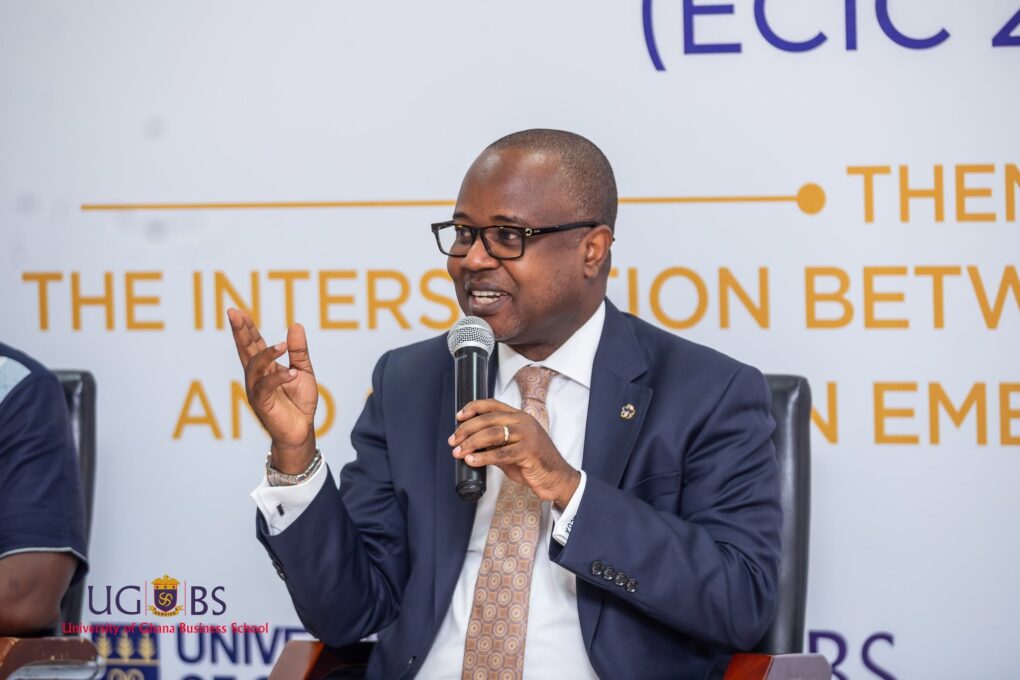
Ghana’s 2022 debt crisis was preceded by several warning signs that had been visible for years but were not fully reflected in assessments of how quickly the country could fall into severe debt distress, according to a new policy paper by former First Deputy Governor of the Bank of Ghana, Dr Maxwell Opoku-Afari.
The study, published by the Finance for Development Lab (FDL), questions whether the debt sustainability framework used to assess Ghana adequately captured the growing risks associated with the country’s changing debt structure, particularly the rapid accumulation of costly domestic debt.
Ghana Had Warning Signs Before the 2022 Debt Crisis
The paper notes that successive IMF and World Bank Debt Sustainability Analyses (DSAs) had identified vulnerabilities in Ghana’s public finances.
Ghana was classified as being at high risk of debt distress as early as 2015. Despite this, debt assessments continued to consider the country’s debt sustainable based partly on assumptions that Ghana would maintain access to financial markets and successfully implement fiscal consolidation measures.
Dr Opoku-Afari argues that the main problem was not necessarily a lack of warning signals, but the failure to adequately assess the probability, scale and speed of a potential debt crisis.
Ghana’s Public Debt Burden Increased Sharply
According to the study, Ghana’s public debt indicators deteriorated significantly over the years.
The present value of public debt-to-GDP, which remained below the 55 percent benchmark during the early 2010s, increased substantially after 2014 and approached 93 percent by 2022.
External debt service also became a major pressure point. The external debt service-to-revenue ratio exceeded its benchmark as early as 2013 and rose above 40 percent of government revenue by 2022.
Interest payments remained above 20 percent of government revenue during the period examined, while Ghana’s international reserves stayed close to the traditional minimum of three months of import cover.
The developments pointed to increasing liquidity pressures and debt-servicing challenges alongside the deterioration in the country’s overall public debt position.
Domestic Debt Risks Were Underestimated
A major concern raised in the policy paper is the treatment of Ghana under the Low-Income Country Debt Sustainability Framework (LIC-DSF).
Dr Opoku-Afari argues that the framework did not fully reflect Ghana’s transformation into a frontier economy with access to international capital markets and a more developed domestic financial market.
In particular, he says the framework did not adequately capture risks associated with the rapid growth of domestic government debt.
As the government increasingly relied on the local market for financing, commercial banks, pension funds, insurance companies and foreign investors became significant holders of government securities.
According to the study, this did not eliminate Ghana’s debt risks but instead changed the way those risks were transmitted through the economy.
High Interest Costs and Refinancing Risks
The paper estimates that Ghana’s weighted-average interest rate on public debt stood at approximately 10.7 percent, while about 17.5 percent of the total debt stock was scheduled to mature within one year.
Ghana was also highly exposed to exchange-rate movements because foreign-currency-denominated debt accounted for an average of 54.5 percent of total public debt.
This created a dangerous combination of high debt levels, expensive borrowing and significant foreign exchange exposure.
As interest payments increased, the government was required to borrow more to meet its financing needs. Refinancing then occurred at increasingly expensive rates, while depreciation of the Ghana cedi simultaneously increased the local-currency cost of servicing external debt.
Three Major Weaknesses in Ghana’s Debt Surveillance
Dr Opoku-Afari identifies three key shortcomings in the way Ghana’s fiscal and debt risks were assessed.
First, economic projections were sometimes overly optimistic and relied heavily on expectations of sustained fiscal consolidation, stronger domestic revenue mobilisation and robust economic growth.
Second, domestic debt dynamics and the connection between government finances and the financial sector were not sufficiently incorporated into risk assessments.
Third, successive economic adjustment programmes placed significant emphasis on short-term fiscal consolidation without adequately addressing structural weaknesses that repeatedly generated new fiscal pressures.
These structural challenges included energy-sector inefficiencies, weaknesses in state-owned enterprise governance, and persistent problems with tax policy and revenue administration.
Ghana’s Repeated IMF Programmes Raise Structural Concerns
The policy paper argues that Ghana has repeatedly achieved periods of macroeconomic stabilisation without fully eliminating the structural factors responsible for recurring debt accumulation.
The country’s 2023 IMF-supported programme was reportedly its 17th IMF programme in roughly six decades.
For Dr Opoku-Afari, this history raises questions about whether economic stabilisation has consistently translated into lasting structural reforms.
Although fiscal consolidation can improve headline economic indicators, the paper warns that those improvements can quickly become vulnerable when the underlying sources of fiscal risk remain unresolved.
Need for Stronger Public Debt Risk Assessment
The study argues that traditional debt sustainability assessments focused heavily on external debt may no longer be sufficient as African economies develop deeper domestic capital markets and gain greater access to commercial financing.
Dr Opoku-Afari is calling for greater attention to several factors, including:
- Domestic debt servicing costs
- Liquidity and refinancing risks
- Sovereign-bank relationships
- Contingent government liabilities
- Exchange-rate risks
- The broader public-sector balance sheet
The paper also recommends regular stress testing and economic scenario analysis to determine how Ghana’s public finances would respond to higher interest rates, currency depreciation or a sudden loss of investor appetite for refinancing maturing government debt.
The findings underscore the importance of stronger public debt management, fiscal discipline, domestic revenue mobilisation and structural economic reforms to prevent Ghana from experiencing another severe debt crisis.
Source: newsthemegh.com