
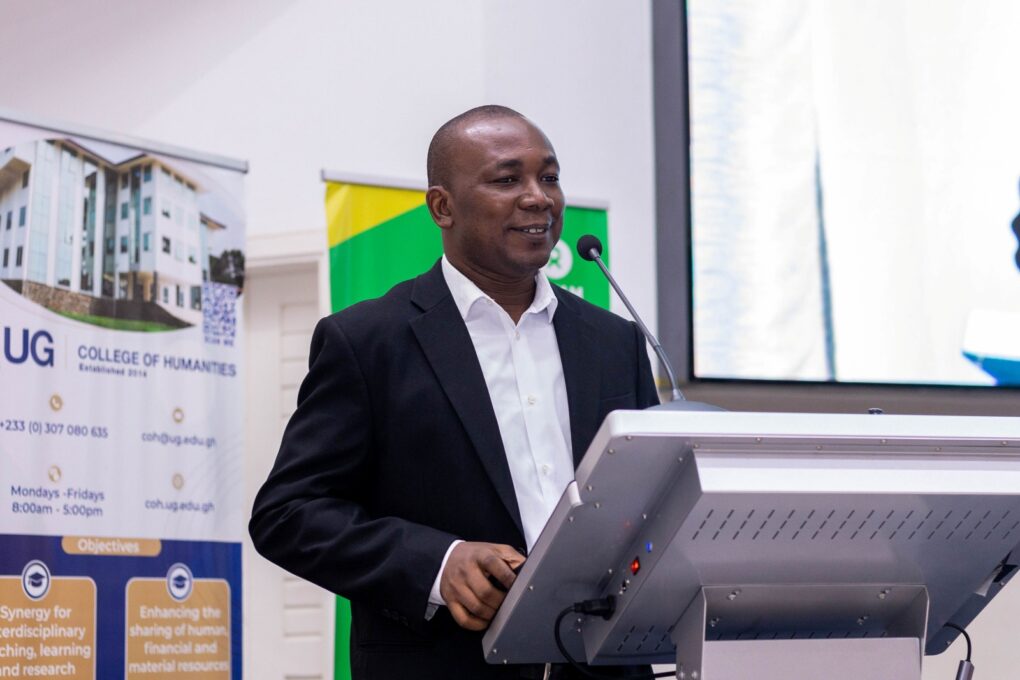
Professor Godfred Alufar Bokpin, an economist and finance expert, has raised concerns over Ghana’s IMF-backed economic reforms, stating that they have not produced the expected structural improvements in domestic revenue mobilisation.
According to the University of Ghana Business School (UGBS) professor, Ghana must strengthen tax administration, plug revenue leakages, broaden the tax base, and reduce its dependence on volatile commodity exports to achieve sustainable economic growth.
IMF-Supported Revenue Reforms Fall Short
Speaking in an interview with the Ghana News Agency (GNA) during a public financial management and fiscal decentralisation training for journalists, Prof. Bokpin said Ghana’s revenue performance under the International Monetary Fund (IMF) programme has remained below expectations.
He explained that despite several tax reforms introduced under the US$3 billion IMF support programme, Ghana’s tax-to-GDP ratio has remained around 14%, showing little improvement over previous years.
The economist noted that the government introduced the Ghana National Revenue Policy (GNRP) in 2023, supported by the Medium-Term Revenue Strategy (MTRS), to improve domestic revenue collection after the tax-to-GDP ratio remained between 12% and 14% since 2015.
Domestic Revenue Collection Misses Government Target
Prof. Bokpin pointed to the Ministry of Finance’s first-quarter revenue report, which showed that GH¢57.53 billion was mobilised against a higher projected target as part of the government’s plan to generate GH¢268.1 billion in revenue by the end of the year.
According to him, the underperformance indicates that years of IMF-supported fiscal reforms have not significantly strengthened Ghana’s revenue base.
He stressed that although Ghana has improved its foreign exchange position through gold-backed reserves held by the Bank of Ghana, the country still requires stronger domestic revenue to finance development and reduce borrowing.
Expand Ghana’s Tax Net and Improve Compliance
The economist urged policymakers to focus on improving tax compliance, closing loopholes within the existing tax system, and bringing more businesses operating in the informal sector into the tax net.
He argued that expanding the number of taxpayers would provide a more reliable and sustainable source of government revenue than increasing tax rates.
Prof. Bokpin also warned against Ghana’s heavy dependence on commodity exports, saying fluctuations in global commodity prices continue to expose the economy to revenue instability.
Political Transitions Affect Business Growth and Tax Revenue
Prof. Bokpin further expressed concern over the impact of political transitions on businesses in Ghana.
He noted that changes in government often affect business operations, with some companies becoming inactive depending on the political environment, ultimately reducing tax revenue.
According to him, Ghana needs a stable and competitive private sector where micro, small, medium, and large enterprises (MSMEs) can thrive regardless of political changes.
He emphasized that protecting indigenous businesses and encouraging long-term private sector growth are essential for expanding the country’s tax base and improving government revenue.
Finance Minister Highlights Revenue Progress
Meanwhile, Finance Minister Dr. Cassiel Ato Baah Forson, during the 2026 Mid-Year Budget Review, disclosed that domestic revenue reached 7.7% of GDP by June 2026, slightly below the government’s target of 7.8% of GDP.
The Finance Minister reiterated that stronger tax compliance, better policy implementation, and efficient revenue administration remain the most effective ways to increase government revenue without introducing higher taxes.
He also revealed that the government’s AI-powered customs reforms have contributed to an estimated 15% increase in customs revenue, demonstrating how digital transformation is helping improve tax collection and public finance management in Ghana.
Source: newsthemegh.com