
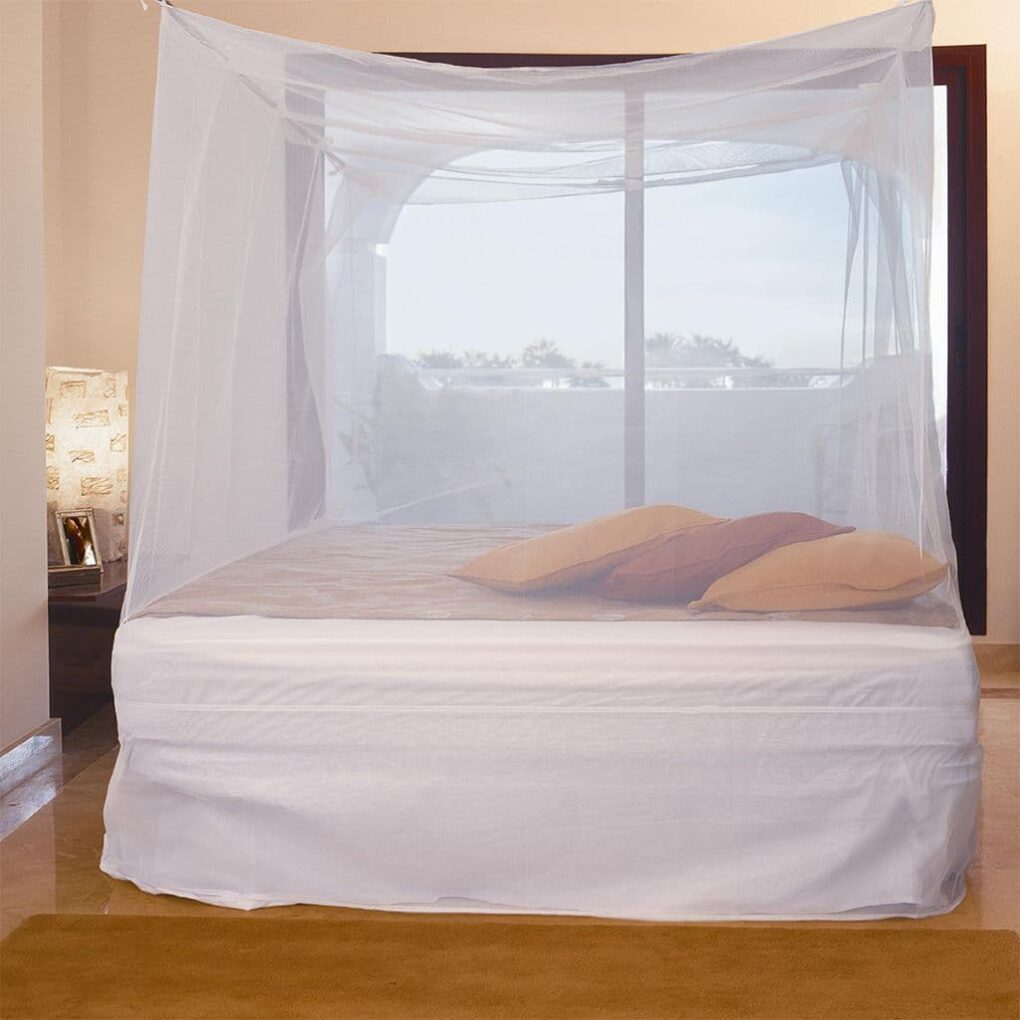
Social media accusations that insecticide-treated nets currently given to elementary school students contain hazardous chemical compounds detrimental to human health have been refuted by the Ghana Health Service as untrue and deceptive.
The service warned the public not to be worried in a press release on June 26, claiming that there is no scientific or legal support for the assertions.
The Interceptor G2, a WHO-approved Long-Lasting Insecticidal Net produced in accordance with international standards and chosen as part of Ghana’s national malaria eradication initiative, is the net being delivered.
It comprises two insecticidal substances, alpha-cypermethrin and chlorfenapyr, both of which are well-known to health and regulatory agencies and have been used for many years in public health initiatives across the globe.
Interceptor G2 has been fully prequalified by the WHO and approved by Ghana’s Food and Drugs Authority, according to the Ghana Health Service.
Regarding the specific allegation of respiratory harm, the Service clarified that the compounds in the net do not lift into the air as dust, smoke, or aerosol due to their extremely low vapour pressure.
When someone sleeps beneath the net, they breathe regular air rather than pesticide.
The Service added that for several decades, insecticide-treated nets have been used throughout Ghana and sub-Saharan Africa, and that there has never been a case of respiratory illness associated with sleeping under an ITN that has been used correctly.
The Ghana Health Service advised parents and carers to use the nets, avoid discussing unproven health claims, and air a freshly obtained net in a shady, well-ventilated area for up to 48 hours prior to first use to allow any minor new-net smell to evaporate.
Every net provided has been inspected, authorised, and confirmed as safe before reaching homes, according to the Ministry of Health and Ghana Health Service, which reaffirmed their dedication to the security and welfare of every Ghanaian.
Source: newsthemegh.com