
The Minister for Local Government, Chieftaincy and Religious Affairs, Mahama Ayariga, has called for a comprehensive overhaul of Ghana’s waste management system to improve waste collection, transportation, treatment, recycling and final disposal across the country.
According to the Minister, significant gaps remain in Ghana’s current sanitation and waste management infrastructure, making it necessary for the government to reform the entire waste management value chain.
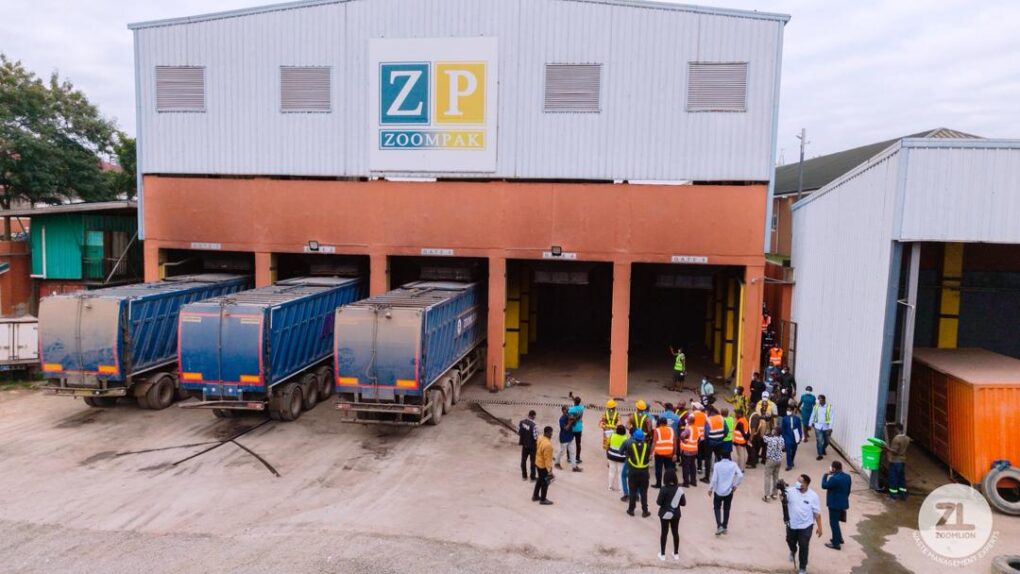
Mr. Ayariga made the call on Tuesday, September 1, 2026, during a tour of major waste management facilities in the Greater Accra Region.
The facilities visited included the Accra Compost and Recycling Plant (ACARP), Achimota Waste Transfer Station, Jamestown Waste Transfer Station and the Kpone landfill site. The facilities are operated under subsidiaries of the Jospong Group of Companies.
The Minister was accompanied by officials of the Arab Bank for Economic Development in Africa (BADEA), the Ministry, the Accra Metropolitan Assembly (AMA), Accra Mayor Michael Allotey and other stakeholders.
The inspection formed part of Mr. Ayariga’s early engagements to identify challenges within Ghana’s waste management value chain and explore opportunities for investment in sanitation infrastructure.

Government Wants Better Waste Collection and Recycling
Mr. Ayariga said the tour had highlighted the need for a comprehensive review of Ghana’s waste management system, particularly from the point where waste is generated in households.
He noted that many households do not properly separate waste at the source, resulting in mixed waste that becomes more difficult and expensive to collect, transport and process.
The Minister said the government would work towards introducing systems that encourage waste segregation at source, including the provision of appropriate waste bins and receptacles.
He explained that separating waste at the household level would make it easier to transport recyclable and other waste materials to appropriate treatment facilities.
Government to Improve Waste Transportation System
Mr. Ayariga also identified waste transportation as a major area requiring reform.
He proposed bringing waste transfer stations closer to communities to reduce the distances travelled by waste trucks and lower transportation costs.
The Minister further called for treatment and composting facilities to be located closer to major cities to improve operational efficiency.
According to him, Ghana already has much of the technology and infrastructure required for modern waste management, but better organisation and coordination are needed to achieve the desired results.
BADEA Explores Investment in Ghana’s Sanitation Sector
The Minister said the facility tour would provide valuable information for the government as it seeks to attract investment into Ghana’s waste management and sanitation sector.
Mr. Ayariga disclosed that he toured the facilities with BADEA Vice President for Operations and Secretary General, Dr. Fatima Elsheikh, to explore potential financing for waste management infrastructure.
He said the government was interested in mobilising resources to strengthen every stage of the waste management process, including waste collection, transportation, treatment, composting and recycling.
The Minister also noted that the challenges identified in Accra are likely to exist in other major Ghanaian cities, including Kumasi and Takoradi.
Mahama Ayariga Backs Polluter-Pays Principle
Mr. Ayariga also appealed to residents and property owners to take greater responsibility for the cost of managing the waste they generate.
He said the government would apply the polluter-pays principle, under which individuals, households and properties that generate waste are expected to contribute fairly towards its management.
However, the Minister assured residents that the government would simultaneously work to make waste collection more efficient and affordable.
He explained that inefficiencies in the current system, including long distances travelled by waste trucks and high operational costs for private waste management companies, contribute to the high fees paid by households.
Mr. Ayariga believes that improving the organisation of the system could significantly reduce household waste management costs, potentially by as much as 50 percent.
Government Promises Transparency in Waste Management
The Minister further assured Ghanaians that the government would promote accountability, transparency and efficiency in the management of funds allocated to the sanitation and waste management sector.
He said resources mobilised for waste management would be used responsibly to improve service delivery and strengthen Ghana’s sanitation infrastructure.
BADEA Highlights Job Creation Opportunities in Waste Management
Dr. Fatima Elsheikh expressed her appreciation for the government’s commitment to improving waste management in Ghana.
She said waste should not be viewed solely as an environmental problem but also as an opportunity for job creation, entrepreneurship, recycling and economic development.
According to her, improving waste management could create employment opportunities while supporting livelihoods and contributing to Ghana’s broader economic growth.
Dr. Elsheikh also stressed the importance of maintaining a clean Accra, describing the capital as not only Ghana’s administrative centre but also an important African business and economic hub.
She pledged BADEA’s readiness to support Ghana’s efforts to develop a more efficient and sustainable waste management system.
The development could provide new opportunities for investment in recycling, composting, waste-to-energy projects, sanitation infrastructure and environmental sustainability, while helping Ghana address persistent waste management challenges.
Source: newsthemegh.com