
PR & COMMS UPDATES
Ghana has renewed its commitment to strengthening intra-African trade, economic integration and the African Continental Free Trade Area (AfCFTA) as the country steps up efforts to remove barriers affecting businesses across the continent.
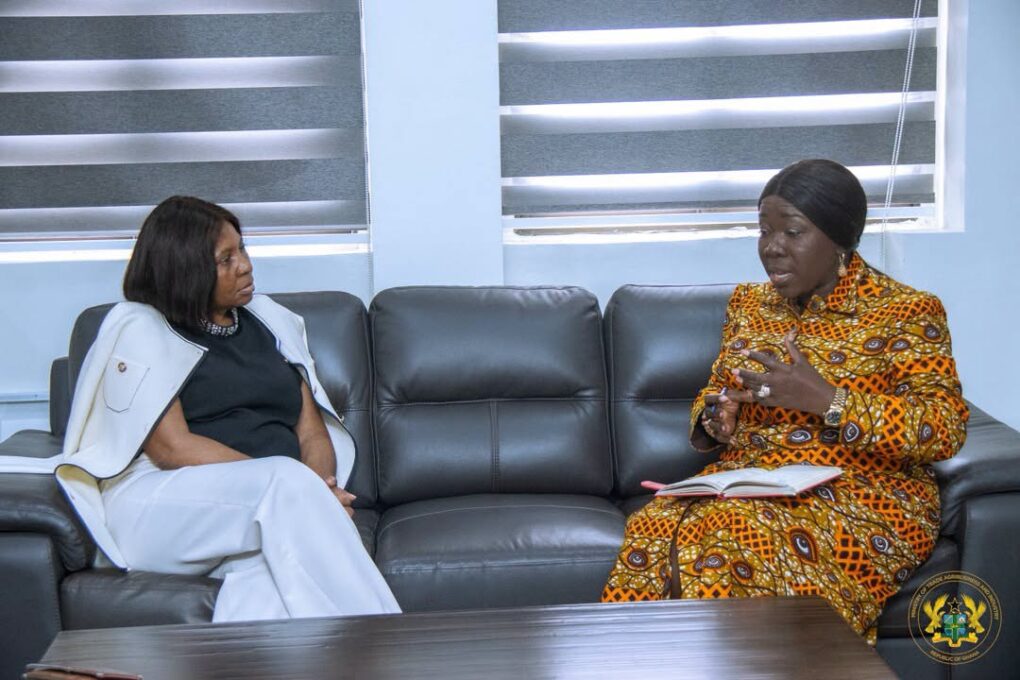
The Minister for Trade, Agribusiness and Industry, Elizabeth Ofosu-Adjare, reaffirmed Ghana’s commitment during a high-level meeting with African Union (AU) Commissioner for Economic Development, Trade, Tourism, Industry and Minerals, Francisca Tatchoup Belobe.
The AU Commissioner visited the Minister to strengthen cooperation between Ghana and the AU and discuss practical measures to increase trade among African countries.

AU Calls for Stronger Intra-African Trade
Commissioner Tatchoup Belobe commended Ghana for its continued support for the AU’s economic integration agenda. She called for stronger political commitment to ensure that existing trade policies deliver real benefits for African businesses, entrepreneurs and consumers.
Although African countries have made progress in establishing continental trade frameworks, intra-African trade continues to face challenges. These include payment systems, currency restrictions and other obstacles that make cross-border business more difficult.
The Commissioner stressed the need for practical solutions to create a more connected African single market. She also recognised the role of institutions such as Afreximbank in improving cross-border payment systems and sought Ghana’s views on strengthening such initiatives.
She further called for greater support for women entrepreneurs and young businesses, saying their participation is essential to achieving sustainable economic growth across Africa.
Ghana Targets Non-Tariff Trade Barriers
Responding to the AU delegation, Minister Ofosu-Adjare said Ghana was ready to deepen its partnership with the African Union and maximise opportunities under the AfCFTA agreement.
She said the government was taking deliberate measures to tackle trade barriers, particularly non-tariff barriers, which continue to pose significant challenges to companies seeking to expand into African markets.
According to the Minister, tariffs can generally be incorporated into the cost of production, while non-tariff barriers often create more complicated obstacles for businesses attempting to access new markets.
She therefore called on African countries to advance the vision of a single continental market where goods, services, people and businesses can move more freely.
Ghana Reviews AfCFTA Implementation
The Minister disclosed that Ghana has appointed a new coordinator for the country’s AfCFTA national office. The coordinator will assess Ghana’s implementation of the agreement, identify existing gaps and develop a clear strategy for maximising the economic benefits of continental trade.
The government is also working to prepare Ghanaian businesses, particularly women-owned enterprises, to compete in international and African export markets through training, capacity building and targeted support programmes.
Products including gari, garments and other locally manufactured goods were identified as having strong potential in African markets. The Minister stressed the need to establish stronger connections between Ghanaian producers and consumers across the continent.
Ghana Pushes for Common Trade Standards
Ofosu-Adjare also called for stronger cooperation among African countries on product standards and conformity assessment to make the movement of goods across borders easier.
She said Ghana’s established standards institutions and experience in meeting international standards could contribute to efforts aimed at achieving mutual recognition of standards across Africa.
Such cooperation, she noted, could reduce unnecessary trade restrictions and help Ghanaian companies access more African markets.

Agribusiness, Textiles and Manufacturing to Benefit
The Minister expressed confidence that Ghana’s existing policies in sectors such as pharmaceuticals, manufacturing, textiles and garments, and agribusiness could complement the work of the AfCFTA Secretariat.
She said stronger continental trade could create new opportunities for Ghanaian manufacturers, exporters, farmers and businesses while supporting industrialisation and the development of regional value chains.
As the host country of the AfCFTA Secretariat, Ghana remains committed to demonstrating the economic benefits of African integration and encouraging more countries to fully participate in the continent’s free trade agenda.
The renewed commitment is expected to support efforts to increase African trade, boost exports, expand business opportunities, strengthen regional value chains and promote economic growth under AfCFTA.
Source: newsthemegh.com