

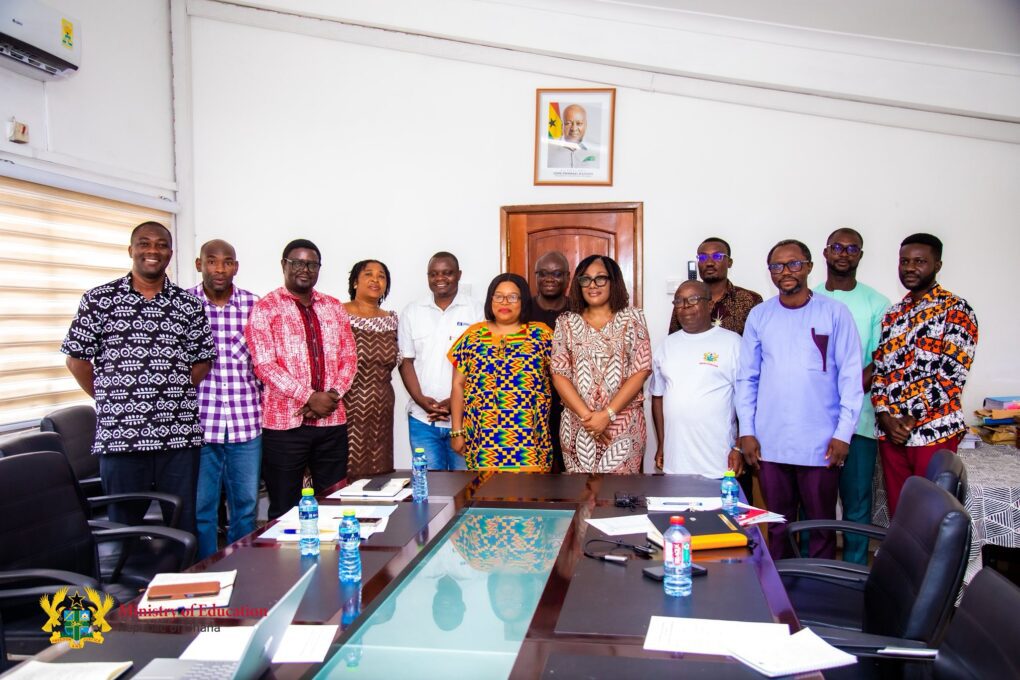
A delegation from Zambia’s Ministry of Education paid Ghana’s Ministry of Education a courtesy call to observe the nation’s educational system, with an emphasis on STEM (science, technology, engineering, and mathematics) and information and communication technology (ICT).
The visit is a component of the Zambian government’s endeavours to boost the country’s ICT and STEM program implementation and embrace best practices in digital education.
The National ICT for Accelerated Development Policy and the Ministry’s Education Strategic Plan (2018–2030) serve as the two main policy frameworks that guide Ghana’s digital transformation agenda in education, according to Chief Director Mrs. Lydia Essuah, who welcomed the delegation on behalf of the Minister for Education.
Mrs. Essuah discussed some of the advancements the Ministry has made in recent years. She cited initiatives such as the One Teacher One Laptop program, Learning Passport, the iBox and iCampus Initiative, the implementation of smart classrooms, enhancing internet access in schools with partner assistance, creating local digital learning materials, and establishing model schools that assist students with disabilities.
Among the several initiatives in the STEM and TVET sectors are the Competency Based Training Assessment models and the tooling of TVET Senior High Schools and Technical Universities.
The high schools’ efforts to develop STEM courses have been a great success.
Despite these successes, she admitted that there are still issues, like insufficient funding for the widespread use of digital technologies.
Mr. Kingsley Boachie, a Senior Research Officer in the Ministry of Education’s Pre-Tertiary Directorate, gave a presentation outlining important tactics used to fortify the educational system.
These include better management and administration, upkeep of the infrastructure, raising teacher and student awareness of cybersecurity, offering zero-rated internet access in collaboration with the National Communications Authority and telecom companies, and incorporating ICT into curriculum design.
He also highlighted how ICT solutions, such as support systems designed for students with impairments, may improve teaching and learning.
The visiting delegation was given the chance to react and express their opinions following the talks and presentations.
Ms. Linda Siwale, Director of Planning and Information at the Ministry of Education in Lusaka, spoke on behalf of the Zambian delegation and expressed gratitude to the Ministry for the cordial welcome and the candid sharing of their experiences.
She claimed that Zambia will greatly benefit from the knowledge acquired from the visit in order to improve its own digital education initiatives.
Source: newsthemegh.com