

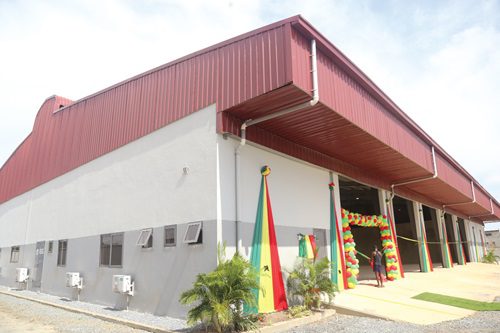
Over 900 tonnes of electronic garbage have been received by the Accra E-waste Handover Facility since it was put into service in October 2024.
E-waste cables, mixed batteries, thermoplastics, and cathode ray televisions are among the materials.
With 114 truck deliveries so far, the campaign, which began with 13 truck deliveries, reflects the expanding national efforts to combat environmental pollution through sustainable recycling.
The Ghana News Agency was informed by Dr. Vincent Nartey Kyere, E-waste Team Leader at the Ministry of Environment, Science, and Technology, that the garbage inflow originated from four holding centers located in Accra, Kumasi, and Koforidua.
In order to make room for additional supplies, he said, the center was working on the off-taker side of the value chain.
“It is catching up, and that is why the facility is quite full now. Ordinarily, these materials would have been out there. One aspect that we are waiting to see shows that the materials that are coming in will go out. That is something that we are still working on,” he emphasized.
90 tonnes of batteries, 30 tonnes of thermoplastics, and more than 160 tonnes of wires have been readied for tender, according to Dr. Kyere.
He emphasized the advantages of collecting batteries to avoid soil contamination from chemical leaching and retrieving thermoplastics, which decreased the chance of clogged drains during the wet season.
Dr. Kyere added that a move toward sustainable e-waste management was shown by the growing interest of local businesses in recycling contracts, especially those involving hazardous and low-margin garbage.
“There will be the need to support some of these companies to acquire the needed technology to deal with the e-waste challenge,” he said.
A total ban on used electrical and electronic devices was not the best option, according to Dr. Kyere, because many people relied on them for their livelihood, and other individuals might not be able to buy new ones.
He did, however, emphasize the necessity of promoting reuse and lifespan extension while preventing the importation of pure rubbish.
“What is recycling if we do not allow or practice reuse?” he said.
Dr. Kyere urged law enforcement to bolster port inspections in order to prevent the importation of garbage.
“All materials must be checked and tested, it is not only those for businesses but those being imported for charity as well, so we prevent dumping,” he added.
Ghana established a holding center in October of last year to stop the unofficial processing of e-waste, which includes burning cables to extract valuable metals like copper, iron, lithium, and aluminum.
In order to encourage people to bring in e-waste, the facility set up three collection centers in 2017 with funding from the German government through KfW.
The collected materials are given to businesses for disposal or recycling.
The program acts as a test run for Act 917’s implementation and Ghana’s National E-waste System.
Additionally, it seeks to establish a systematic framework for Ghana’s proper recycling and disposal of waste from electrical and electronic equipment.
Increased use of electrical devices, population expansion, imported secondhand electronics with shorter lifespans, and the fact that an estimated one in four items arrive as waste are all factors that experts attribute to the rise in e-waste.
According to UNDP estimates, Ghana’s e-waste operations support at least 200,000 people nationwide and generate between $105 and 268 million yearly.
Open burning and other informal extraction techniques have contaminated water supplies and released harmful gasses, posing serious health hazards.
Source: newsthemegh.com