
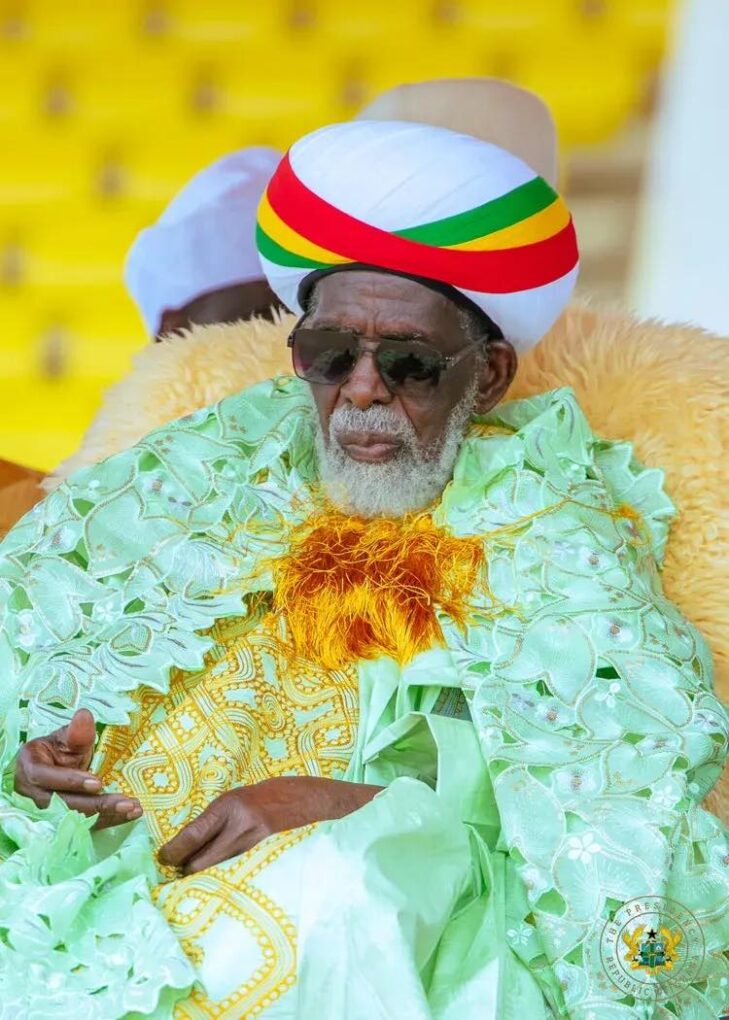
The Office of the National Chief Imam has welcomed the government’s decision to introduce Arabic as an optional subject in Ghana’s public schools, describing the policy as an opportunity to equip students with valuable language skills for international engagement.
The Office said concerns surrounding the teaching of Arabic should be addressed through constructive dialogue, accurate information and a clear understanding of the government’s education policy.
In a statement signed by Dr Abubakari Mohammed Marzuq Azindoo, Personal Assistant to the National Chief Imam, the Office explained that Arabic should be viewed as a major international language rather than being associated exclusively with religion.
According to the statement, Arabic plays an important role in international diplomacy, science, business, trade and global communication.
The statement followed an announcement by Education Minister Haruna Iddrisu that the government intends to introduce Arabic and Chinese as optional subjects in public schools in Ghana.
The proposed policy has generated public discussion, with some stakeholders expressing concern that introducing foreign languages could contribute to the neglect of Ghanaian languages in the education system.
However, the Office of the National Chief Imam argued that Ghana’s increasingly connected economy requires young people to develop diverse language skills that can improve their opportunities in the global economy.
Arabic as a Global Language
The Office noted that Arabic is one of the six official languages of the United Nations and is widely spoken across several economically important regions of the world.
It therefore believes that providing Ghanaian students with the opportunity to study Arabic could enhance their prospects in international relations, diplomacy, commerce, education and research.
The Office also commended the Ministry of Education for working through the National Council for Curriculum and Assessment (NaCCA) to develop a standardised curriculum for the subject.
According to the statement, a structured curriculum would help ensure quality teaching and learning for students who choose to study Arabic.
Arabic Remains an Optional Subject
The National Chief Imam’s Office further welcomed the Ministry of Education’s clarification that Arabic will remain an optional subject.
It stressed that the language would not be compulsory and that its introduction should not be interpreted as an attempt to change the secular nature of Ghana’s public education system.
The Office pointed to Ghana’s constitutional framework, which guarantees religious freedom while prohibiting the establishment of a state religion.
It therefore urged the public to rely on verified information and facts when discussing the government’s new education policy.
Arabic and Ghanaian Education
The statement also compared Arabic with other foreign languages taught in Ghana, including French, German and Spanish.
According to the Office, studying international languages can contribute to students’ academic and professional development without necessarily changing their cultural identity or religious beliefs.
It consequently called on educationists, policymakers, teachers, parents and the general public to assess the Arabic language policy objectively and avoid spreading misinformation or disinformation.
The Office of the National Chief Imam reaffirmed its willingness to collaborate with the Ministry of Education, Ghana Education Service and other relevant institutions to support an inclusive, peaceful and globally competitive education system.
The introduction of optional Arabic studies is expected to remain a key topic in Ghana’s education policy discussion as stakeholders consider how best to balance Ghanaian languages, foreign language education and the demands of the global economy.
Source: newsthemegh.com